Desserts
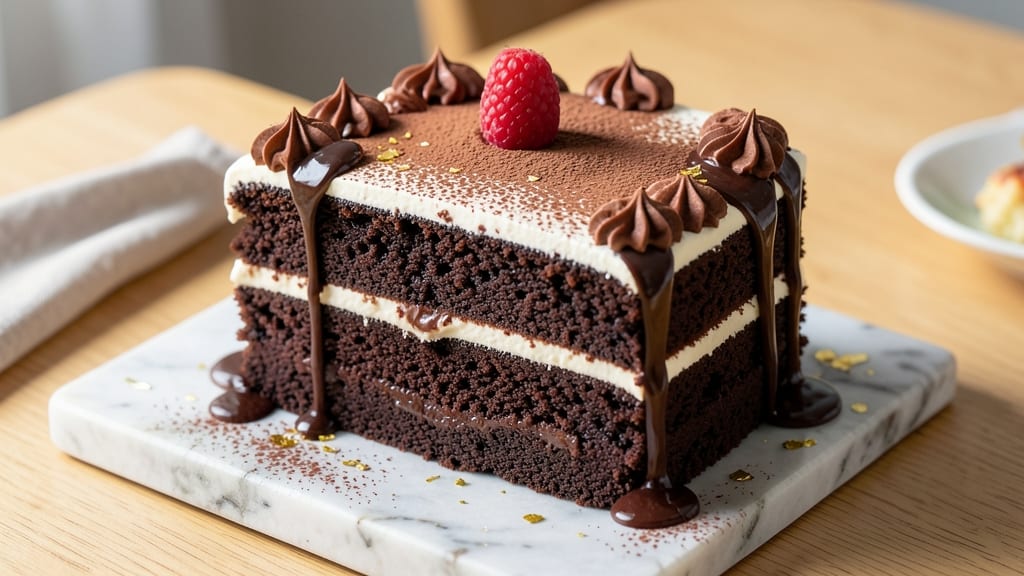
This best chocolate cake recipe with vanilla buttercream frosting delivers the perfect combination of ultra-moist layers and velvety vanilla buttercream that will have everyone asking for seconds. 💛 The secret lies in precise ingredient ratios and a gentle baking technique that keeps the cake tender while developing rich chocolate flavor.
I've tested countless variations, and this one consistently wins for texture and taste. What sets this recipe apart is the foolproof method for achieving a moist crumb without drying out.
The cake batter includes ingredients like sour cream and vegetable oil that create a tender, fudgy texture, while the vanilla buttercream adds a light, airy contrast. The frosting is made with real vanilla extract and room-temperature butter for that signature silky smoothness.
By the time you're done, you'll have a perfectly balanced dessert—rich chocolate layers that stay moist, topped with a luscious frosting that's neither too sweet nor too heavy. The cake holds its shape beautifully while staying tender enough to cut cleanly.
This is the kind of dessert that feels like a hug in every bite. Whether you're baking for a special occasion or just treating yourself, this recipe delivers restaurant-quality results at home.
The frosting is stable enough to pipe decorations if you're feeling fancy, or simply spread smoothly for a classic look. Let's get started on creating your showstopper dessert.
Ingredients for best chocolate cake recipe with vanilla buttercream frosting
These 15 ingredients transform into the most decadent chocolate cake with velvety frosting you'll ever make.
| Ingredient | Amount | Notes |
|---|---|---|
| All-Purpose Flour 🌾 | 2 ½ cups | Sifted for light texture |
| Unsweetened Cocoa Powder 🍫 | ¾ cup | Natural or Dutch-processed |
| Granulated Sugar 🍬 | 2 cups | White or light brown |
| Light Brown Sugar 🍯 | ½ cup | Packed firmly |
| Vegetable Oil 🫒 | 1 cup | Light or canola preferred |
| Sour Cream 🥛 | 1 cup | Full-fat for moisture |
| Large Eggs 🥚 | 2 whole | Room temperature for even mixing |
| Vanilla Extract 🌿 | 2 tsp | Pure, high-quality extract |
| Baking Soda 🧂 | 1 tsp | Pure, no aluminum |
| Salt 🧂 | ½ tsp | Fine sea salt preferred |
| Hot Water 💧 | ½ cup | For activating cocoa powder |
| Unsalted Butter 🧈 | 1 ½ cups | Room temperature, cubed |
| Powdered Sugar 🍬 | 3 cups | Sifted for smooth frosting |
| Real Vanilla Extract 🌿 | 2 tsp | Double-strength preferred |
| Heavy Whipping Cream 🥛 | 1 cup | Cold for stiff peaks |
The cocoa powder is non-negotiable for that deep, rich chocolate flavor. Valrhona or Ghirardelli are my go-tos, but Hershey's Special Dark works in a pinch. The sour cream keeps the cake moist, so don't skip it—trust me on the full-fat version. For the frosting, Land O'Lakes European-style butter gives the best flavor, but any good-quality butter works. Room temperature is key—cold butter won't whip properly, and melted butter will make the frosting too soft. The powdered sugar should be sifted to avoid graininess in the final frosting. Pro tip: if your kitchen gets humid, add a pinch of cornstarch to the powdered sugar to prevent clumping.
No sour cream? Plain Greek yogurt at the same amount works beautifully. Running short on vanilla extract? Vanilla bean paste has seeds for extra flavor. The frosting can be made ahead—just whip the butter and powdered sugar first, then fold in the cream and vanilla. If your frosting isn't stiff enough, chill it for 10-15 minutes. For a fudgier cake, increase the cocoa powder by 1 tbsp and reduce the flour by the same amount. The cake layers can be frosted the day they're baked or stored separately in the fridge for up to 3 days before assembling. If you're feeling fancy, add a layer of chocolate ganache between the cake and frosting for extra decadence.
This cake keeps beautifully—3 days at room temperature covered loosely with plastic, or 1 week refrigerated once frosted. For longer storage, freeze the unfrosted layers for up to 3 months. Thaw at room temperature before frosting. The frosting can be made 2 days ahead and stored in the fridge—just rewhip before using. If your frosting separates, simply rewhip it until smooth. This recipe makes enough for two 9-inch layers, so you'll have leftovers perfect for sandwiches or cupcakes. Store frosted cake in the fridge for up to 5 days—it actually tastes better the next day as the flavors meld.
Why You'll Love This Recipe
- No Mixer Needed: Mixing the batter is just folding flour into melted butter and oil—no electric mixer required. Honestly, the brown sugar keeps it moist without overworking, and the cocoa powder dissolves smoothly if you sift it first.
- Rich Without Overpowering: The combo of granulated and light brown sugar gives it that perfect balance—sweet but not cloying, with the cocoa adding depth. That vanilla buttercream? It’s the cherry on top, creamy but not heavy, like a hug in frosting form.
- Birthday to Brunch: Slice it for a celebration or pack it for lunch—this cake holds up beautifully. Between us, I’ve served it at 3 AM with coffee when the kids forgot their homework and at Sunday brunch with fruit. The oil-based batter stays tender for days.
- Budget-Friendly Luxury: You’re using pantry staples here—no fancy ingredients, just good chocolate flavor. The oil keeps costs down while still delivering that melt-in-your-mouth texture. Plus, leftovers? They taste just as good reheated (yes, even on a Tuesday night).
Step-by-step instructions for ultra-moist chocolate cake with vanilla buttercream
Here's how to create the perfect chocolate cake—rich, moist layers and velvety frosting every time!
👨🍳 Step 1: Whisk Dry Ingredients for Perfect Texture
In a large bowl, sift together the 2.5 cups all-purpose flour and 0.75 cup unsweetened cocoa powder. I always sift to prevent dense layers—those little air pockets make all the difference. Add 1 tsp baking soda and 0.5 tsp salt, then whisk until completely combined. This ensures even distribution of leavening and flavor throughout the batter.
In a separate small bowl, mix the 2 cups granulated sugar and 0.5 cup light brown sugar together. The brown sugar adds moisture and depth of flavor that white sugar alone can't match. Set both mixtures aside—they'll be ready when we combine everything.
🍳 Step 2: Create the Cake Batter Foundation
In a stand mixer fitted with the paddle attachment, combine the 1 cup vegetable oil, 1 cup sour cream, and 2 whole large eggs at room temperature. Mix on medium speed for 2-3 minutes until fully incorporated and slightly thickened. The sour cream adds moisture while keeping the cake tender—don't skip this step!
Gradually add the sugar mixture while mixing on medium speed for another 3-4 minutes. The batter should look smooth and slightly ribbony when you lift the paddle. This creaming process incorporates air, which helps create that light, airy texture we're after. Scrape down the sides of the bowl with a spatula to ensure even mixing.
🥘 Step 3: Combine Wet and Dry Ingredients
With the mixer running on low speed, gradually add the dry ingredients in three additions. Mix just until combined—about 30 seconds—after each addition. Overmixing develops gluten and makes the cake tough. Here's the thing—you want to see some flour streaks remain. That tells you the batter is properly mixed but not overworked.
Pour in the 0.5 cup hot water and 2 tsp vanilla extract, mixing on low speed just until the hot water is fully incorporated. The hot water activates the cocoa powder for maximum flavor development. The batter should be thick but pourable—like a rich chocolate pudding. If it looks too thick, add 1 tablespoon of milk (though with these ingredients, it shouldn't be necessary).
🔥 Step 4: Bake to Golden Perfection
Preheat your oven to 350°F and grease two 9-inch round cake pans thoroughly. Line the bottoms with parchment paper circles for easy removal. Divide the batter evenly between the prepared pans—you should have about 1½ cups per pan. Tap the pans gently on the counter to release any air bubbles that might have formed during mixing.
Bake for 30-35 minutes until a toothpick inserted in the center comes out with moist crumbs (not wet batter). The edges should be set but the tops still slightly springy to the touch. I know it's tempting to open the oven door early, but resist! Every time you peek, you risk causing the cakes to sink. Let them bake undisturbed for the full time.
⏰ Step 5: Make the Vanilla Buttercream Frosting
While the cakes cool, make the frosting by beating the 1.5 cups unsalted butter (room temperature) with an electric mixer until light and fluffy—about 3-4 minutes. Gradually add the 3 cups powdered sugar, mixing on low speed until combined. This prevents a sugar cloud from taking over your kitchen!
Add the 2 tsp real vanilla extract and 1 cup heavy whipping cream (cold), mixing on medium-high speed until the frosting is smooth and holds stiff peaks when you lift the beaters. If it's too thick, add 1 teaspoon of milk at a time until you reach the perfect consistency. The frosting should be thick enough to hold its shape but still spreadable—this is what gives that professional bakery look.
🎂 Step 6: Assemble and Decorate
Once the cakes have cooled completely (about 1 hour), level the tops if needed. Place one cake layer on a cake stand or plate and spread a generous layer of frosting on top. Place the second layer on top and spread frosting over the entire cake, covering the sides completely. Use a spatula to create smooth, clean edges by pulling the frosting toward the center as you work.
For that perfect finish, I like to add a final swirl of frosting on top using a piping bag fitted with a star tip. Chill the cake in the refrigerator for 30 minutes before slicing to help the frosting set. Each slice should reveal that ultra-moist chocolate cake with a velvety vanilla buttercream that melts in your mouth. Trust me, this is the combination that makes all the difference!
Pro Tips For Making Best Chocolate Cake Recipe With Vanilla Buttercream Frosting
- Sift the Cocoa: Don’t just dump that cocoa powder—sift it first, especially if you’re using Dutch-process (natural cocoa). I learned this the hard way when my first batch turned out dense and uneven. A quick sift with the flour removes clumps and guarantees a smoother, lighter crumb. (Yes, even if you’re impatient like me.)
- Whip the Buttercream Cold: Chill your mixing bowl and beaters before whipping the buttercream. The butter should be soft but not greasy—think "malleable, not melted." I used to rush this, and the frosting would either turn grainy or melt too fast. A cold bowl keeps everything stable, and you’ll get that silky, pipeable texture without extra effort.
- Skip the Overmixing: Once the flour and cocoa are incorporated into the wet ingredients, stop mixing the second everything comes together. Overmixing develops gluten, and suddenly your cake turns tough instead of tender. I now count to 10 after the last flour addition—just enough to combine, no more.
- Test for Doneness Early: Pull the cake from the oven when the edges are set but the center still jiggles slightly. A toothpick with moist crumbs (not wet batter) is the real test. I’ve ruined more cakes than I’ll admit by waiting for that "clean" toothpick—this cake needs a little residual moisture to stay rich. Let it cool in the pan for 10 minutes, then transfer.
Best sauces and condiments for best chocolate cake recipe with vanilla buttercream frosting
Chocolate Ganache
For an extra decadent twist, top your cake with a thin layer of chocolate ganache between the frosting and cake. Melt 8 ounces of high-quality dark chocolate (I love Ghirardelli 72%) with ½ cup heavy cream over a double boiler.
Let it cool slightly before spreading—it should be thick enough to hold its shape but still pourable. This adds a luxurious richness that pairs perfectly with the vanilla buttercream. 🍫
Salted Caramel Drizzle
Elevate your cake with a salted caramel drizzle that balances the sweetness. Heat 1 cup granulated sugar in a saucepan until it melts into amber, then carefully pour in ½ cup heavy cream while whisking.
Stir in 2 tbsp unsalted butter and ½ tsp flaky sea salt (like Maldon). Let it cool slightly before drizzling over the frosted cake. The salt enhances the vanilla and chocolate flavors beautifully. 🍯
Coffee Syrup Glaze
A coffee syrup glaze adds depth and complexity to your chocolate cake. Simmer ½ cup strong brewed coffee with ½ cup granulated sugar and 1 tbsp corn syrup until dissolved.
Brush this warm glaze over the frosted cake just before serving. The coffee enhances the chocolate flavor while adding a subtle bitterness that cuts through the sweetness. ☕
Peanut Butter Swirl
For a nutty twist, mix ½ cup creamy peanut butter (like Jif Natural) with ½ cup powdered sugar and a pinch of salt. Spread a thin layer on one cake layer before adding the frosting, then swirl with a knife for a marbled effect.
The peanut butter complements the vanilla buttercream and adds protein-rich texture. 🥜
Raspberry Curd Filling
Brighten the richness with a raspberry curd filling. Cook 1 cup raspberry jam (no seeds) with 2 tbsp lemon juice and 1 tbsp cornstarch until thickened. Spread this between cake layers for a tart contrast to the sweet frosting. The berry flavor adds freshness that balances the chocolate perfectly. 🍓
Espresso Buttercream
Swap the vanilla buttercream for an espresso-infused version by adding 1 tbsp instant espresso powder** to the buttercream mixture. This deepens the chocolate flavor and adds a subtle coffee note that enhances the overall richness. The frosting will have the same silky texture but with an adult-friendly complexity. ☕
Nutrition facts
Frequently asked questions
Why does your chocolate cake recipe use both granulated and brown sugar?
The granulated sugar creates structure and helps with browning, while the light brown sugar adds moisture and a deeper caramel flavor. The combination gives you that perfect balance of sweetness and texture—brown sugar keeps the cake tender while granulated sugar provides that classic cake bite.
Can I make this cake in a different pan size?
Yes! For a 9-inch round pan, use the full recipe. For an 8-inch pan, reduce batter by 20% (about 1¼ cups per pan). For a 10-inch pan, increase by 20% (about 1¾ cups per pan). Always adjust baking time—check with a toothpick at 30 minutes for smaller pans or 40 minutes for larger ones.
What's the secret to getting smooth frosting every time?
Room-temperature butter is key—it should be soft but not melted. Also, sift the powdered sugar and mix the frosting on medium-high speed for 3-4 minutes after adding all ingredients. If it's too thick, add milk 1 tsp at a time—never water, which can make it grainy.
How do I store leftovers to keep them fresh?
Cover the cake with plastic wrap and store at room temperature for 3 days. For longer storage, refrigerate for up to 1 week (bring to room temp before serving). To freeze, wrap layers individually in plastic and freeze for up to 3 months. Thaw completely before frosting.
Can I substitute sour cream with something else?
Yes! Use 1 cup plain Greek yogurt (full-fat) or ½ cup mayonnaise + ½ cup milk as substitutes. Both add moisture, though sour cream gives the best flavor. The yogurt version will be slightly tangier, while the mayo version adds richness—neither will affect the cake's texture dramatically.