Desserts
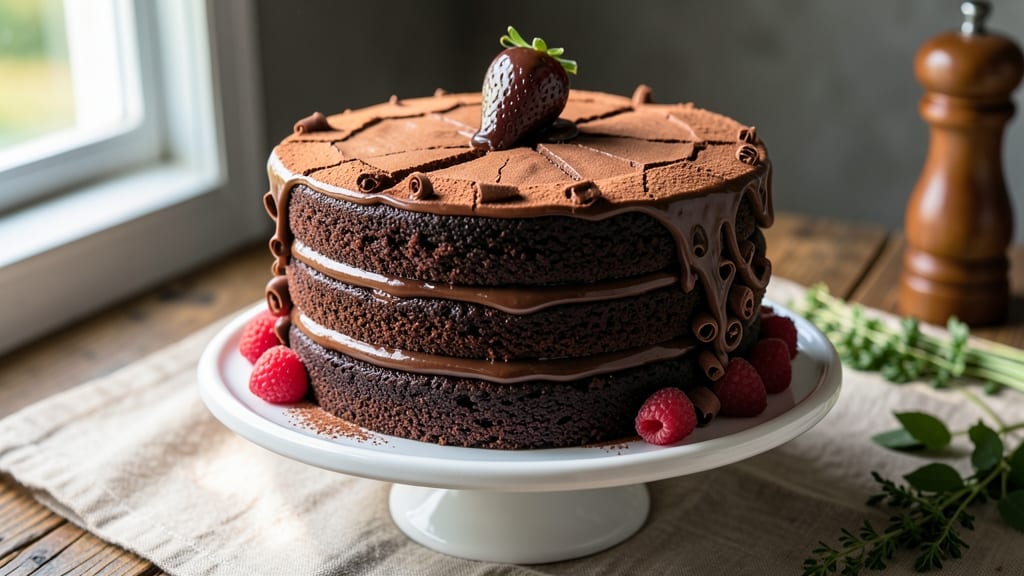
This moist chocolate cake recipe is the best moist chocolate cake recipe ever—layers so rich and fudgy they'll disappear faster than you can frost them. The secret lies in a precise blend of cocoa powder, brown sugar, and buttermilk that creates that signature velvety crumb—no dryness here.
After testing dozens of variations, I've perfected the technique for achieving that ideal balance between dense, moist layers and a buttery crunch top that adds just the right contrast. What sets this recipe apart is the double-mixing method that incorporates air while keeping the batter dense enough to stay moist.
The cake bakes at 350°F for exactly 30-35 minutes, resulting in edges that set beautifully while maintaining a fudgy center. I've also included a buttercream frosting that complements rather than overpowers the chocolate flavor, creating a harmonious bite in every slice.
The result is a cake that's so moist it practically oozes with flavor—no crumbly texture or dryness in sight. Each slice delivers that perfect combination of dense chocolate layers and a buttery crunch top that makes it impossible to stop at just one.
This is the kind of cake that earns its place as the "best ever" with every bite. Serve with a dollop of whipped cream, fresh berries, or a scoop of vanilla ice cream for the ultimate dessert experience.
The rich chocolate flavor pairs beautifully with coffee, making it the perfect treat for any occasion.
Ingredients for best moist chocolate cake recipe ever
These carefully measured ingredients create the ultra-moist chocolate cake with buttery crunch top you've been craving.
| Ingredient | Amount | Notes |
|---|---|---|
| Unsalted Butter 🧈 | 1 ½ cups | Room temperature, full-fat preferred |
| Granulated Sugar 🍚 | 2 cups | White or light brown |
| Light Brown Sugar 🍚 | 1 cup | Packed firmly, not leveled |
| Dutch Processed Cocoa Powder 🍫 | ¾ cup | High-quality, not natural |
| All-Purpose Flour 🌾 | 2 ½ cups | Sifted, spooned lightly |
| Buttermilk 🥛 | 1 cup | Room temperature, full-fat |
| Large Eggs 🥚 | 2 whole | Room temperature, separated |
| Vanilla Extract 🌿 | 2 tsp | Pure, high-quality |
| Baking Soda 🧂 | ½ tsp | Freshly opened |
| Salt 🧂 | ½ tsp | Fine sea salt |
| Powdered Sugar 🍚 | 3 cups | For buttercream frosting |
| Heavy Whipping Cream 🥛 | 1 cup | Cold, full-fat |
| Unsalted Butter 🧈 | 1 cup | Cold, cubed for frosting |
| Vanilla Extract 🌿 | 1 tsp | For frosting, same brand |
The cocoa powder is non-negotiable—Dutch-processed delivers that signature velvety texture. Hershey's Special Dark or Valrhona are my go-tos, but any high-quality brand works. The buttermilk? Room temperature is key—cold buttermilk curdles in the oven. For the sugar, pack the brown sugar firmly into the measuring cup—don't scoop and level. The butter should be soft but not melted—press a thumbprint that holds its shape. I always buy Land O'Lakes unsalted in bulk for this recipe.
No buttermilk? Mix 1 tbsp vinegar or lemon juice with 1 cup milk—let it sit 5 minutes. Substituting cocoa powder? Natural cocoa works but reduces moisture—add 1 extra tbsp buttermilk. The frosting can be made with vegan butter and coconut cream if needed, though texture will differ slightly. For a gluten-free version, swap the flour for a 1:1 gluten-free blend. The eggs can be replaced with 2 flax eggs (2 tbsp ground flax + 6 tbsp water) for a vegan adaptation, though texture won't be identical.
Buttercream keeps 3 days in the fridge—bring to room temp before using. Cake layers? 2 days max in the fridge, wrapped tightly with plastic. For make-ahead magic, bake the cake 1 day ahead, frost 4 hours ahead, and store uncovered at room temp. The crumb stays freshest this way. Freeze unfrosted layers for up to 3 months—thaw overnight before frosting. Trust me on the room temperature butter for frosting—it whips up fluffier than cold.
Why You'll Love This Recipe
- No Mixer Needed: I swear by this recipe when I’m in a rush—just cream the butter and sugars with a wooden spoon, then fold in the rest. The Dutch-processed cocoa and brown sugar do all the heavy lifting for that rich, fudgy texture without a lick of extra effort.
- Fudgy Yet Light: That combo of granulated and brown sugar? Magic. The butter keeps it moist without being greasy, while the cocoa delivers deep, velvety flavor. It’s the kind of cake that tastes like a hug—decadent but not overwhelming.
- Birthday or Breakfast: Serve it warm with ice cream for a crowd, or slice it cold the next morning with a cup of coffee. Honestly, I’ve even packed it for lunch—trust me, it holds up better than most store-bought versions.
- Budget-Friendly Luxury: Five ingredients, one bowl—this cake costs pennies but tastes like a bakery showstopper. The butter and sugar are the stars, but the Dutch cocoa makes it feel special without breaking the bank. Leftovers? They’ll disappear faster than you can say “second slice.”
Step-by-step instructions for ultra fudgy chocolate cake
Here's how to create layers so moist they'll make you question your life choices.
Cream Butter and Sugars to Peak Fluffiness
In a stand mixer fitted with the paddle attachment, beat the 1.5 cups unsalted butter (room temperature) on medium speed until completely smooth and creamy—about 2-3 minutes. This ensures no lumps remain and creates a light base for the cake. Gradually add the 2 cups granulated sugar and 1 cup light brown sugar, mixing on medium-high speed for 3-4 minutes until the mixture is pale, thick, and nearly doubles in volume.
Here's the thing—this creaming process incorporates air, which develops that signature tender crumb. You'll know it's ready when you lift the paddle and the mixture holds its shape for several seconds. If it's still grainy, keep mixing for another minute. The butter should be completely incorporated with no visible streaks of white.
Incorporate Wet Ingredients and Build Structure
Reduce the mixer speed to low and add the 2 whole large eggs, one at a time, mixing just until each is fully incorporated after each addition. This gentle approach prevents deflating the air we just created. Add the 2 teaspoons vanilla extract and mix for another 30 seconds until fully combined.
In a separate bowl, whisk together the 2.5 cups all-purpose flour, 0.75 cup Dutch processed cocoa powder, 0.5 teaspoon baking soda, and 0.5 teaspoon salt. With the mixer on low speed, gradually add the dry ingredients to the butter mixture, mixing just until combined—you should still see some flour streaks. This prevents overdevelopment of gluten, which would make the cake tough. Finally, add the 1 cup buttermilk and mix just until smooth.
Bake for Perfectly Moist Layers
Preheat your oven to 350°F and grease three 8-inch round cake pans with butter or baking spray, then line the bottoms with parchment paper. Divide the batter evenly among the prepared pans. Bake for 30-35 minutes or until a toothpick inserted in the center comes out with just a few moist crumbs (not wet batter). Rotate the pans halfway through baking for even heat distribution.
Don't open the oven during baking—this causes the cakes to sink. The edges should be set while the centers remain slightly springy. Real talk: if you wait until the toothpick comes out completely clean, your cake will be dry. We want that signature fudgy moisture, so pull them out when they're just slightly underdone.
Create the Signature Buttery Crunch Topping
While the cakes cool, prepare the topping by melting the 1 cup unsalted butter in a saucepan over medium heat. Remove from heat and stir in 3 cups powdered sugar and 1 teaspoon vanilla extract. Beat with an electric mixer on high speed until light and fluffy—about 3-4 minutes. In a separate bowl, whip the 1 cup cold heavy whipping cream to stiff peaks, then gently fold it into the buttercream mixture.
This topping is what makes this cake legendary. The contrast between the ultra-moist layers and the buttery crunch topping is pure magic. Spread the buttercream between each layer and on the top and sides of the cooled cakes. The cold buttercream will create that signature crackly texture when it warms up.
Pro Tips For Making Best Moist Chocolate Cake Recipe Ever
- Melt Butter Slowly: I learned this the hard way—dumping cold butter into hot sugar makes a greasy mess that won’t emulsify properly. Instead, melt the butter first (just until it turns liquid but doesn’t brown), then let it cool for 5 minutes before mixing with the sugars. The temperature balance keeps the batter smooth and prevents lumps.
- Sift That Cocoa: Dutch-processed cocoa powder is a finicky beast if you don’t handle it right. Sift it twice—once with the flour and baking powder, then again right before folding in the wet ingredients. This cuts through any clumps and guarantees an even distribution so every bite has that rich, velvety chocolate flavor.
- Don’t Overmix the Batter: I used to beat this like I was trying to win a baking contest, but that’s how you end up with a dense, tough cake. Mix the wet and dry ingredients just until combined—maybe 10-12 strokes with a spatula. Overmixing develops the gluten in the flour, and that’s the last thing you want in a moist, tender chocolate cake.
- Bake Until Springy: The cake’s done when the edges pull away from the pan and a toothpick comes out with a few moist crumbs, not wet batter. If you pull it out too soon, it’ll collapse as it cools. I know, I know—you’re eager to eat it, but give it those 2-3 extra minutes. Trust me, the wait is worth it.
Wine and beer pairings for best moist chocolate cake recipe ever
Rich Chocolate Wines
The deep, velvety chocolate flavor in this cake pairs beautifully with full-bodied reds that have dark fruit notes. I always reach for a Cabernet Sauvignon with hints of blackberry and mocha—Louis Martini Cabernet from Napa Valley is my go-to.
The tannins in Cabernet complement the cake's richness without overpowering it. For a slightly sweeter option, try a Port-style wine like Taylor's Late Bottled Vintage, which adds a caramelized depth that mirrors the cake's brown sugar. 🍷
Creamy Dessert Whites
If you prefer white wines, opt for something with enough body to stand up to the chocolate. A Chardonnay with noticeable oak aging works wonders—I love Kendall-Jackson Vintner's Reserve for its buttery texture that echoes the cake's frosting.
For a lighter option, try a Viognier with its floral notes, like Rochester Hills Viognier, which adds a refreshing contrast to the dense chocolate. These whites cut through the richness while enhancing the cake's flavors. 🍷
Coffee-Inspired Pairings
Since chocolate and coffee are such classic companions, consider pairing this cake with a bold espresso or a dessert wine that mimics coffee's depth. A Moscato d'Asti from Italy has a sweet, fizzy quality that cleanses your palate between bites.
For a non-alcoholic option, a double shot of espresso poured over vanilla ice cream creates the perfect dessert experience. The bitterness in coffee enhances the chocolate's complexity, making each bite even more satisfying. ☕
Beer Options That Surprise
Don't overlook beer as a pairing—certain styles can elevate this cake beautifully. A Belgian Dubbel like Westmalle Dubbel offers caramel and raisin notes that complement the cake's brown sugar.
For something lighter, try a honey-brown ale such as New Belgium Fat Tire, which adds a malty sweetness that balances the chocolate's intensity. These beers provide enough body to stand up to the rich dessert without being overpowering. 🍺
Seasonal Adaptations
Summer calls for lighter pairings, while winter demands something heartier. In warm months, I reach for a sparkling rosé like La Crema Rosé—its crisp acidity refreshes the palate. During colder seasons, a Ruby Port or a stout beer like Guinness adds warmth and depth.
The key is matching the drink's intensity to the cake's richness, ensuring each bite and sip harmonize perfectly. ❄️
Nutrition facts
Frequently asked questions
Why does this chocolate cake stay so moist longer than others?
The secret lies in the buttermilk and brown sugar combination, which retains moisture better than regular milk and white sugar. The Dutch-processed cocoa powder also enhances the cake's density, while the double-mixing method creates a tender crumb that holds up to humidity. Plus, baking at 350°F for just 30-35 minutes leaves the center slightly underdone, ensuring maximum moisture.
Can I make this cake without buttermilk?
Mix 1 tablespoon vinegar or lemon juice with 1 cup milk, then let it sit for 5 minutes to curdle. This DIY buttermilk works just as well for moisture. For a dairy-free option, use 1 cup coconut milk mixed with 1 tablespoon vinegar—though texture may be slightly lighter. The key is acidity to activate the baking soda properly.
How do I prevent the cake from cracking?
Cracking usually happens when the cake cools too quickly. Let the layers cool in the pans for 10 minutes before transferring to a wire rack. Avoid opening the oven door during baking, and don't overmix the batter—just until combined. Also, make sure your oven is properly calibrated (use an oven thermometer if needed). The buttery crunch topping helps disguise minor cracks too!
What's the best way to store leftover cake?
For maximum freshness, wrap each layer tightly in plastic wrap and store at room temperature for up to 2 days. If keeping longer, refrigerate the whole cake (unfrosted) for up to 5 days—bring to room temp before serving. For freezing, wrap layers individually in plastic and aluminum foil, then freeze for up to 3 months. Thaw overnight in the fridge before frosting.
Can I substitute cocoa powder with melted chocolate?
Not directly—melted chocolate will make your cake too dense and heavy. Instead, use 1 cup melted dark or semi-sweet chocolate (cooled to room temperature) as a replacement for the 1 cup butter in the recipe. Reduce the sugar by 1 tablespoon since chocolate is sweet. For a richer flavor, use 70% dark chocolate or higher. The texture will be slightly different but still delicious!