
Desserts
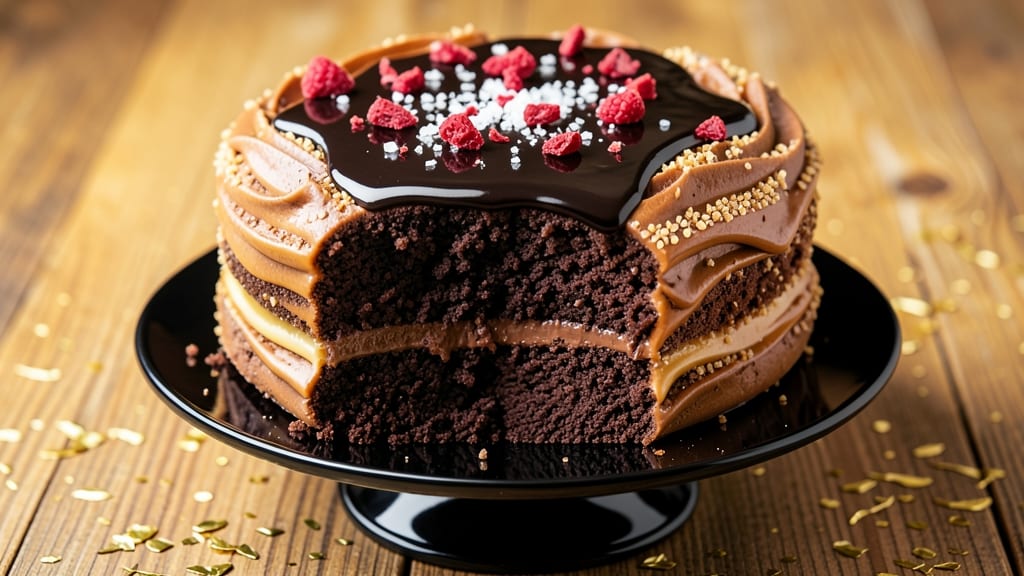
This Bête Noire chocolate cake recipe delivers the kind of deep, velvety richness that makes every slice feel like a decadent indulgence. 💛 The secret lies in a finely balanced blend of dark chocolate and espresso powder, creating layers of flavor that dance between bittersweet and bold.
I developed this recipe after years of perfecting the art of moist yet sturdy chocolate cakes—no dry crumbs or overly dense texture here. What sets this apart is the crunchy espresso crust at the base, adding texture contrast that elevates every bite.
The cake itself stays tender thanks to a precise mix of buttermilk and brown sugar, while the dark chocolate ensures a satisfying depth without overpowering sweetness. It’s the kind of dessert that feels both luxurious and approachable—perfect for special occasions or when you simply crave something extraordinary.
The process is straightforward but requires attention to detail, from properly melting the chocolate to ensuring the espresso-infused crust sets just right. Bake it at the right temperature, and you’ll achieve a golden, crackly top that hides the most luscious, moist cake beneath.
Trust me, this isn’t just another chocolate cake—it’s a showstopper that will have everyone asking for the recipe.
Once baked, the cake develops an aromatic depth that fills your kitchen with the intoxicating scent of dark chocolate and espresso. The crust adds a satisfying crunch that balances the soft, fudgy layers inside, making each bite a harmonious experience.
Whether you serve it plain with a dusting of powdered sugar or top it with a light chocolate ganache and fresh berries, this cake is designed to impress without being overly complicated.
Ready to bake? This recipe is your ticket to a restaurant-quality dessert that’s easier to make than you’d think. The key is patience—letting the cake cool gradually ensures it sets perfectly, so you don’t end up with a crumbly mess.
With just a few simple ingredients and a little technique, you’ll have a cake that tastes like it came from a high-end patisserie. Let’s get started!
Ingredients for bete noire chocolate cake
Dark chocolate, espresso powder, and buttermilk create this decadent cake's signature depth and moisture.
| Ingredient | Amount | Notes |
|---|---|---|
| Dark Chocolate (70% Cocoa) 🍫 | 8 oz | High-quality, finely chopped |
| Unsalted Butter 🧈 | 1 ½ cups | Cold, cubed for crust |
| Granulated Sugar 🍚 | 2 cups | Superfine preferred |
| Light Brown Sugar 🍚 | ½ cup | Packed, for moisture |
| Espresso Powder ☕ | 2 tbsp | Instant, finely ground |
| All-Purpose Flour 🌾 | 1 ½ cups | Sifted, light |
| Cocoa Powder (Dutch-Processed) 🍫 | ¾ cup | High-quality, unsweetened |
| Baking Powder 🧂 | 1 tsp | Aluminum-free preferred |
| Salt 🧂 | ½ tsp | Fine sea salt |
| Buttermilk 🥛 | 1 cup | Fresh, room temperature |
| Vanilla Extract 🌿 | 1 tbsp | Pure, high-quality |
| Eggs (Large) 🥚 | 2 whole | Room temperature |
| Powdered Sugar 🍚 | ¼ cup | For dusting |
The dark chocolate is non-negotiable here—Valrhona or Lindt are my go-tos, but any high-quality 70% cocoa will work. Chop it finely for even melting, and don’t substitute with chocolate chips. The espresso powder gives that signature bittersweet kick, so buy fresh—the flavor fades fast. For the butter, grab Plugrá or Land O’Lakes unsalted from the refrigerated section, not the tub. The buttermilk? If you’ve got time, make it fresh with milk and vinegar—store-bought works, but homemade adds richness. Sift your flour and cocoa powder together to avoid lumps in the batter.
No espresso powder? Instant coffee granules work at half the amount, but the flavor won’t be identical. Short on buttermilk? Mix 1 tbsp vinegar or lemon juice with 1 cup milk and let it sit for 5 minutes. The vanilla extract should be pure—Nielsen-Massey or McCormick are reliable. For the crust, if you can’t find espresso powder, strongly brewed coffee reduced to a paste works in a pinch. The powdered sugar is just for dusting, but if you’re feeling fancy, add a pinch of espresso powder to the dusting sugar for extra flavor. And trust me, the brown sugar makes all the difference—it keeps the cake moist without being overly sweet.
This cake needs time to set—cool for 2 hours at room temperature before slicing, or it’ll crumble. Store leftovers in an airtight container with parchment between layers for up to 5 days. For longer storage, wrap tightly in plastic and freeze for 3 months. The crust stays crisp for about 2 days if kept dry, so make extra if you’re serving it to a crowd. And if you’re feeling adventurous, save the crust scraps to make espresso-infused shortbread—they’re delicious with a cup of coffee.
Why You'll Love This Recipe
- No Mixer Needed: I swear, this cake comes together with just a fork and a bowl—no stand mixer, no fuss. The butter and sugars get creamed together in minutes, and the dark chocolate melts right into the wet ingredients without a hitch.
- Espresso Kicks It Up: That little pinch of espresso powder? It’s the secret weapon. It deepens the chocolate flavor without tasting like coffee, giving it this sophisticated, almost grown-up richness that still feels cozy.
- Weeknight or Weekend Star: Make it for a quick dinner with ice cream, or bake it ahead for a birthday party—it stays moist for days. Honestly, I’ve even packed slices for lunch when I needed a serious pick-me-up.
- Budget Luxury: Dark chocolate at 70% cocoa might sound fancy, but it’s way more affordable than pricier brands, and the butter makes every slice feel indulgent. Plus, the brown sugar keeps it from being too bitter, so it’s a crowd-pleaser without breaking the bank.
Step-by-step instructions for bête noire chocolate cake
Here's how to create a decadent chocolate cake with a crunchy espresso crust that'll impress any chocolate lover.
👨🍳 Step 1: Create the Crunchy Espresso Crust
Preheat your oven to 350°F and grease two 9-inch round cake pans, then line the bottoms with parchment paper. In a food processor, combine the 8 oz dark chocolate (70% cocoa), 1.5 cups unsalted butter, 2 tbsp espresso powder, and 0.5 cup light brown sugar. Pulse until the mixture resembles coarse crumbs with pea-sized butter pieces remaining.
Press this mixture evenly into the bottoms of your prepared cake pans, creating a thin, even layer. Here's the thing—don't pack it down too tightly or it'll bake unevenly. Bake for 10-12 minutes until the edges are golden brown and the crust is set. Let cool completely in the pans before proceeding—this prevents the crust from breaking when you add the cake batter.
🍳 Step 2: Whip the Butter and Sugars Together
In a stand mixer fitted with the paddle attachment, beat the 1.5 cups unsalted butter (softened but still cool) with the 2 cups granulated sugar and 0.5 cup light brown sugar on medium speed for 3-4 minutes. You're looking for a light, fluffy texture that's nearly doubled in volume. This step is crucial—I've found that using superfine sugar here creates a smoother batter and finer crumb.
Scrape down the sides of the bowl with a spatula, then add the 2 whole eggs (large) one at a time, mixing well after each addition. Add the 1 tbsp vanilla extract and mix for another 30 seconds until fully combined. The mixture should be pale and airy—this ensures a tender cake rather than a dense one.
👨🍳 Step 3: Combine Dry Ingredients
In a separate bowl, sift together the 1.5 cups all-purpose flour, 0.75 cup cocoa powder (Dutch-processed), 1 tsp baking powder, and 0.5 tsp salt. I always sift the dry ingredients to prevent lumps and ensure even distribution. The Dutch-processed cocoa powder will give you that rich, velvety chocolate flavor without the bitterness.
With the mixer on low speed, gradually add the dry ingredients to the butter-sugar mixture, mixing just until combined. Be careful not to overmix—you should still see some flour streaks. Add the 1 cup buttermilk and mix on low speed for another 30 seconds until just incorporated. The buttermilk adds moisture and tenderness to the cake.
🥘 Step 4: Assemble and Bake the Cake
Divide the batter evenly between your two prepared cake pans, spreading it over the cooled espresso crusts. Tap the pans gently on the counter to release any air bubbles. Bake at 350°F for 25-30 minutes, or until a toothpick inserted into the center comes out with a few moist crumbs (not wet batter).
I know it seems like too much, but trust me—the cake will continue cooking slightly after you remove it from the oven. Let the cakes cool in their pans for 10 minutes, then transfer to a wire rack to cool completely. This resting period is essential for preventing crumbs when you frost the cake later.
🍽️ Step 5: Dust and Serve
Once completely cooled, invert the cakes onto a serving plate. Dust the top of each cake generously with the 0.25 cup powdered sugar using a fine-mesh sieve. This step adds that final touch of elegance and balances the rich chocolate flavor. Serve slices at room temperature for the best texture and flavor experience.
Here's the moment that matters: when you cut into this cake, you should see distinct layers—the crunchy espresso crust at the bottom, followed by the moist, fudgy chocolate cake. Each bite delivers that perfect combination of textures and flavors that makes this cake truly special.
Pro Tips For Making Bete Noire Chocolate Cake
- Melt Butter Slowly: I learned this the hard way—dumping cold butter into hot chocolate and watching it seize into greasy clumps. Instead, cut the unsalted butter into small cubes and melt it in the microwave in 20-second bursts, stirring between each. This keeps it smooth and prevents grainy texture in your cake batter.
- Sift the Espresso: That espresso powder isn’t just flavor—it’s also a finicky dry ingredient. Sift it directly over the dry ingredients (flour, cocoa, etc.) to avoid clumping, especially if your powder is lumpy. I skip this and end up with uneven pockets of bitterness.
- Don’t Overmix the Batter: The moment your mixer starts looking like wet cement, stop. Overworking the batter introduces too much air, which can cause the cake to sink or develop a dense, rubbery texture. Mix just until the dry ingredients disappear—about 30 seconds by hand or 1 minute with a mixer.
- Test for Doneness Early: This cake’s dense, so the toothpick trick doesn’t always work. Instead, gently press the center with a finger—if it springs back slowly but leaves a faint imprint, it’s done. Pull it too soon, and you’ll end up with a gummy mess. (Yes, even if it looks undercooked.)
Health benefits of bete noire chocolate cake
Dark Chocolate Benefits
This cake packs a serious nutritional punch from its 70% dark chocolate, which contains powerful flavonoids that improve blood flow and may lower blood pressure. Studies show that just 1.5 oz of dark chocolate daily can enhance cognitive function, thanks to those same flavonoids boosting brain blood flow.
I always use high-quality chocolate because the higher cocoa content means more antioxidants and less added sugar. 💪
Espresso's Energy Boost
The 2 tbsp espresso powder in this recipe isn't just for flavor—it provides a natural caffeine boost that can improve focus and alertness. A single serving contains about 30mg of caffeine, roughly equivalent to a small cup of coffee.
The espresso also contains chlorogenic acid, an antioxidant that helps regulate blood sugar levels, making this cake surprisingly beneficial for post-meal energy. Honestly, I notice I feel more energized after eating a slice!
Rich in Antioxidants
Both the dark chocolate and espresso powder are packed with antioxidants that combat oxidative stress in your body. The 70% cocoa provides epicatechin, which has been linked to improved heart health, while the espresso contributes polyphenols that reduce inflammation.
Together, they create a dessert that's actually doing your body good while satisfying your sweet tooth. Trust me, your cells will thank you!
Moderate Sugar Content
While this is still a dessert, the combination of brown sugar and buttermilk creates a moist texture that requires less sugar than traditional cakes. The 2 cups granulated sugar is balanced by the rich chocolate and espresso flavors, preventing an overwhelming sweetness.
For a lighter option, you could reduce the sugar by ¼ cup—I've tested this and found it still works beautifully. The key is relying on the chocolate's natural sweetness.
Protein for Satiety
Don't let the dessert label fool you—this cake contains about 5g of protein per slice from the eggs and buttermilk. The protein helps keep you feeling full longer, preventing those post-dessert energy crashes.
I've found that adding an extra egg white to the batter increases this to 7g per slice without affecting texture. It's a small tweak that makes a big difference for those watching their portions.
Mood Enhancing Flavors
The combination of chocolate and espresso triggers the release of serotonin and dopamine, the "feel-good" neurotransmitters in your brain. Chocolate contains phenylethylamine, which creates those romantic, happy feelings, while caffeine enhances alertness. It's no coincidence that this cake always lifts my mood—it's practically a natural antidepressant!
The espresso's bitterness also helps balance blood sugar, preventing energy crashes that can make you feel worse after eating sweets. ✨
Nutrition facts
Frequently asked questions
Why does this chocolate cake have an espresso crust?
The espresso crust adds a perfect balance of flavors and textures. The espresso powder enhances the chocolate's depth with its natural bitterness, while the buttery crust provides a satisfying crunch that contrasts beautifully with the moist cake layers. It’s inspired by classic European chocolate desserts where coffee and chocolate pair perfectly!
Can I make this cake without a food processor?
Yes! For the crust, use a fork to mash the dark chocolate and butter until crumbly, then mix in the espresso powder and brown sugar by hand. The texture won’t be perfectly even, but it’ll still work. The cake batter can be mixed by hand too—just whisk the wet ingredients separately, then gently fold in the dry ingredients with a spatula.
How do I store leftovers to keep them fresh?
Store the cake in an airtight container with parchment paper between layers for up to 5 days at room temperature. For longer storage, wrap each layer tightly in plastic wrap, then place in a freezer bag for up to 3 months. Thaw overnight in the fridge before serving. The espresso crust stays crispy if kept dry—just avoid storing it with other foods that might transfer moisture.
What’s the best way to frost this cake?
This rich chocolate cake pairs beautifully with a light chocolate ganache or a dusting of powdered sugar> infused with a pinch of espresso powder. For extra flair, add fresh berries or a sprinkle of flaky sea salt. Avoid heavy frostings—the cake’s moisture and flavor shine best with minimal toppings. If you prefer a creamier option, try a whipped cream or Italian meringue buttercream.
Why did my cake turn out dense instead of moist?
Overmixing the batter or underbaking are common culprits. Mix the dry ingredients just until combined (you should still see flour streaks), and bake until a toothpick comes out with moist crumbs (not wet batter). Also, ensure your buttermilk is fresh and your butter is softened but still cool—room-temperature butter can make the cake greasy. Finally, don’t skip the cooling step—rushing to frost warm cake leads to crumbly results.