Desserts
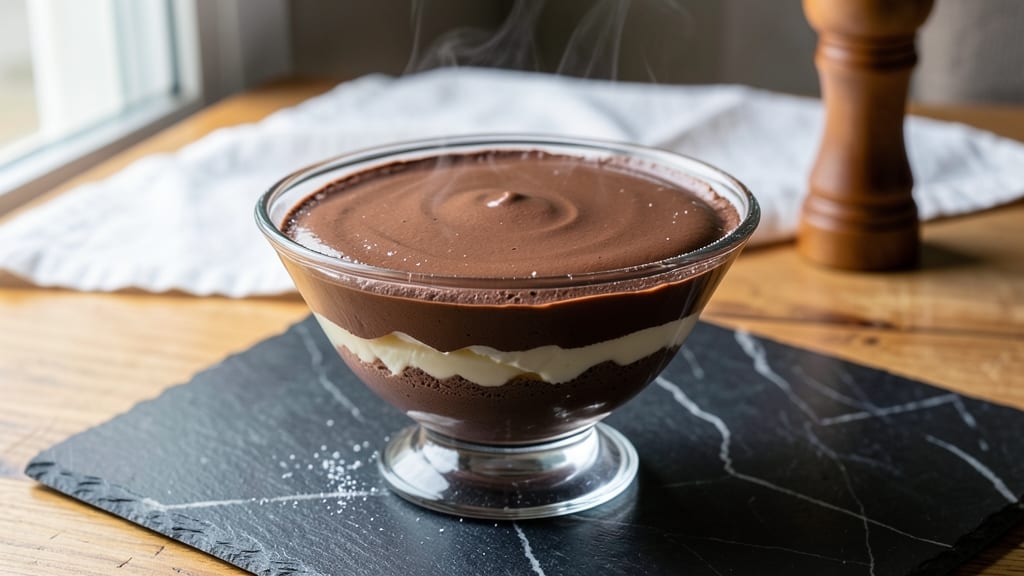
This bitter chocolate mousse recipe delivers velvety depth and intensified cocoa richness that transforms dessert into an experience. The secret lies in high-quality 70%+ cocoa chocolate, melted and tempered to perfection, then folded into whipped egg whites for light, airy texture that defies traditional mousse density.
Every spoonful reveals layers of dark chocolate complexity without overpowering sweetness—just the right balance of bitterness and smoothness.
What sets this recipe apart is the technique: whipped egg whites (or aquafaba for vegan) create the signature lift, while proper chilling ensures that silky, almost liquid-like consistency you crave.
No graininess, no separation—just restaurant-quality mousse that feels decadent yet light. The process is straightforward but demands precision in tempering and folding to maintain that luxurious mouthfeel.
Once set, this mousse becomes a blank canvas for plating: top with fresh raspberries for tart contrast, sprinkle with flaky sea salt to enhance the chocolate's depth, or dust with cocoa powder for a classic finish.
The result is a dessert that elevates any occasion—whether it's a weeknight treat or an impressive showstopper for guests. Let's create this masterpiece together.
The key to success lies in patient tempering and gentle folding—no rushing allowed. With just 10 minutes of active work and 4 hours of chilling, you'll achieve a dessert that looks as impressive as it tastes.
This isn't just mousse; it's a textural and flavor revelation that proves bitter chocolate can be the star of the show.
Ingredients for bitter chocolate mousse
High-quality chocolate and precise technique create this velvety, restaurant-worthy dessert masterpiece.
| Ingredient | Amount | Notes |
|---|---|---|
| High-Quality Dark Chocolate (70%+ Cocoa) 🍫 | 8 oz | Valrhona or Callebaut preferred |
| Large Egg Whites 🥚 | 4 whole | Room temperature, separated |
| Granulated Sugar 🍚 | ½ cup | Superfine preferred for dissolution |
| Unsalted Butter 🧈 | 4 oz | European-style, 82% fat |
| Heavy Cream 🥛 | 1 cup | 35% fat content for stability |
| Vanilla Extract 🌿 | 1 tsp | Pure Madagascar bourbon |
| Flaky Sea Salt 🧂 | ¼ tsp | Maldon or Jacob's preferred |
| Fresh Raspberries 🍓 | ½ cup | For garnish, organic preferred |
| Cocoa Powder (Dutch-Processed) 🍫 | 2 tbsp | Valrhona or Guittard |
| Lemon Juice 🍋 | ½ tsp | Freshly squeezed |
| Aquafaba (Optional) 🥫 | ½ cup | For vegan version, whipped |
The chocolate selection is non-negotiable. Valrhona or Callebaut 70%+ cocoa delivers the depth required—avoid anything below 65% or with added oils. Whole bars temper best; chop your own if buying pre-chopped. European-style butter with 82% fat content adds luxurious mouthfeel without overpowering the chocolate's complexity. For the egg whites, room temperature separation is critical—cold whites won't whip properly. If you're making this ahead, store the whites in the fridge no longer than 24 hours before use. The vanilla extract should be Madagascar bourbon—it has the most nuanced flavor profile for balancing the bitterness.
No high-quality chocolate? Ghirardelli 66% or Lindt 70% are solid alternatives, though they lack the professional finish. For the aquafaba option, whip it to stiff peaks first before folding—it behaves differently than egg whites. The Dutch-processed cocoa powder should be reserved for dusting; regular cocoa works for the tempering process. If you're short on time, microwave the chocolate in 20-second bursts at 50% power instead of tempering by hand, though you'll lose some of that silky texture. The raspberries should be organic and slightly underripe for maximum tartness—conventional berries often lack flavor. For the sea salt, Maldon or Jacob's flakes dissolve beautifully on the tongue to enhance the chocolate's depth.
This mousse requires 4 hours of uninterrupted chilling—no shortcuts. Use a lightweight plastic wrap pressed directly onto the surface to prevent skin formation. It keeps for 3 days refrigerated and 1 month frozen when portioned in airtight containers. For freezing, add an extra 1 tbsp of heavy cream per serving to compensate for moisture loss. The whipped egg whites should be folded in in three additions—first a third, then half, then the remainder—to maintain maximum air incorporation. If you're plating, chill the mousse 15 minutes longer before unmolding for cleaner edges.
Why You'll Love This Recipe
- No Whisk Required: I swear by the French method here—just melt the chocolate, whip the egg whites to stiff peaks, and fold. No blender, no stress, just a hand mixer and 15 minutes of your life. The butter melts right into the cream, so you’re not chasing lumps or overworking anything.
- Rich Without Sugar: Between us, that 70% dark chocolate does all the heavy lifting. The bitterness balances the sweetness so well, you’ll use half the sugar you’d normally dare. It’s decadent but not cloying—like a grown-up treat that doesn’t sneak up on your teeth.
- Date Night or Meal Prep: Serve it chilled in glasses for a fancy dessert, or portion it into jars for grab-and-go breakfasts. Honestly, I’ve eaten it straight from the bowl at 10 AM and still felt sophisticated. The heavy cream keeps it luscious even after a day in the fridge.
- Budget-Friendly Luxury: You’re paying for quality chocolate, but the rest? Eggs, sugar, butter—pantry staples that stretch. I’ve made this for six people for under $10, and no one ever guesses it’s not some overpriced bakery mousse. That’s the magic of simplicity.
Step-by-step instructions for bitter chocolate mousse
Mastering this technique delivers velvety texture and deep cocoa intensity every time.
Temper the Egg Whites for Maximum Volume
Separate the 4 whole large egg whites from yolks immediately after removing from the refrigerator—room temperature whites whip better. Using a stand mixer fitted with the whisk attachment, beat them on low speed until soft peaks form. Gradually add the 0.5 cup granulated sugar while mixing on medium-high speed for 3-5 minutes until glossy, stiff peaks form that hold their shape when the whisk is lifted.
This slow incorporation prevents sugar crystals from forming, which would weigh down your mousse. The sugar should dissolve completely—if it doesn't, your mousse will be grainy. For extra insurance, sift the sugar through a fine-mesh strainer before adding. The egg whites should now be thick enough to hold their shape when you turn the bowl upside down.
Melt and Infuse the Chocolate Base
Place the 8 oz high-quality dark chocolate in a heatproof bowl set over a saucepan of simmering water, ensuring the bottom doesn't touch the water. Stir gently until completely melted—70% cocoa chocolate requires patience, as it has a lower melting point than milk chocolate. Remove from heat and immediately stir in the 2 tbsp cocoa powder and 0.5 tsp lemon juice to deepen the flavor profile.
Let the mixture cool for 5 minutes until it reaches 110°F—this prevents the egg whites from losing their structure when incorporated. The chocolate should be thick but still pourable. If it cools too much, warm it gently over low heat for 30 seconds while stirring constantly. This infusion step is where the bitter notes truly shine.
Fold Chocolate into Egg Whites
Using a rubber spatula, gently fold one-third of the whipped egg whites into the chocolate mixture to lighten it. Then, with a folding motion (cutting through the center and scooping up the sides), gradually incorporate the remaining egg whites in two additions. Be careful not to deflate the mixture—your goal is to create a marbled effect rather than fully blending.
This technique creates air pockets that give the mousse its signature lightness. If you overmix, the texture will become dense. The final mixture should resemble thick, glossy pudding with visible streaks of white. For an optional vegan version, replace the egg whites with 0.5 cup whipped aquafaba (whipped to stiff peaks) and follow the same folding process.
Incorporate Butter and Cream
Cut the 4 oz unsalted butter into small cubes and add to the chocolate mixture. Use a hand mixer on low speed to emulsify the butter until fully incorporated—this prevents butter clumps that would make the mousse grainy. Then, slowly drizzle in the 1 cup heavy cream while mixing on low speed until completely combined. Add the 1 tsp vanilla extract and 0.25 tsp flaky sea salt and mix for 10 seconds to distribute evenly.
The butter acts as an emulsifier, creating a stable mousse structure, while the cream adds richness without overpowering the chocolate's bitterness. The salt enhances the chocolate's depth, and the vanilla adds complexity. The mixture should now be smooth, glossy, and thick enough to hold its shape when spooned.
Chill and Garnish for Perfect Texture
Divide the mousse among 6 serving glasses and refrigerate for at least 4 hours or until fully set. The longer it chills, the firmer the texture—6 hours is ideal for clean slices. Just before serving, garnish each portion with 0.5 cup fresh raspberries (tossed with a pinch of sugar if desired) to provide a bright, acidic contrast to the bitter chocolate.
Serve immediately after removing from the refrigerator—this mousse melts quickly at room temperature. Each spoonful should deliver a perfect balance of silky texture and intensified cocoa flavor, with the raspberries cutting through the richness. For an extra touch, dust with additional cocoa powder or a pinch of flaky sea salt to elevate the flavor profile.
Pro Tips For Making Bitter Chocolate Mousse
- Temper the Chocolate: Melt that 70%+ dark chocolate gently over a double boiler—never microwave or direct heat. I learned this the hard way when my first batch seized into a grainy mess from overheating, and no amount of whisking brought it back.
- Whip Egg Whites Cold: Chill your bowl and beaters before whipping the egg whites—room temp makes them stubborn. I was skeptical until I tried it, and now my meringue holds its shape without collapsing. (Yes, even if you're impatient like me.)
- Fold Like You Mean It: Use a rubber spatula and gentle folds—don’t stir like you’re mixing cake batter. The goal is to keep air in, not deflate it. I used to overmix and end up with a dense, sad mousse. (Your future self will thank you.)
- Sweeten the Butter: Mix 1 teaspoon of sugar into the melted butter before folding—it balances the bitterness and adds a subtle richness. Sounds weird, but it works: my mousse now has depth instead of just chocolate overload.
Make-ahead tips for this recipe
Pre-Chilling Strategy
Prepare your mousse up to 24 hours in advance—this is where the magic happens! After folding in the egg whites and butter, divide the mixture into 6 ramekins or serving glasses and refrigerate uncovered for 4 hours.
This initial chilling prevents skin formation while allowing flavors to meld. I like to place the glasses on a wire rack to ensure even cooling. 🥧
For a smoother texture, give the mousse a 10-minute rest at room temperature before the final 4-hour chill. This step helps stabilize the air pockets created during folding. If you're short on time, a 2-hour chilling period works in a pinch, though the texture will be slightly softer.
Freezer-Friendly Portions
For long-term storage, portion the mousse into airtight freezer-safe containers with 1-inch headspace to prevent ice crystals. Freeze for up to 1 month, but add an extra 1 tbsp heavy cream per serving to compensate for moisture loss during thawing.
When ready to serve, thaw in the fridge overnight for the best texture. 🧊
To reheat frozen mousse, transfer it to the fridge 6 hours before serving—this gradual thawing preserves the silky consistency. Avoid microwave reheating, as it creates a grainy texture. For a quick fix, let it sit at room temperature for 30 minutes before serving, though it won't be as firm.
Garnish Prep Ahead
Prep your garnishes the night before to save time! Toss ½ cup fresh raspberries with ½ tsp granulated sugar and store in an airtight container in the fridge. The sugar helps preserve their tartness while preventing mushiness.
For the sea salt, keep Maldon flakes in a small jar with a tight lid—they stay crisp and ready to sprinkle. 🍓
If using cocoa powder for dusting, sift it through a fine-mesh strainer into a small bowl. This removes any lumps and ensures a smooth, even finish.
Store the powder in a cool, dark place to maintain its flavor. Pro tip: Use a fine-mesh sieve for dusting—it creates a professional, cloud-like effect.
Serving Temperature
Serve your mousse 15 minutes after removing from the fridge for the perfect balance of firmness and creaminess. The ideal serving temperature is 45-50°F—too cold, and it becomes dense; too warm, and it melts too quickly.
I like to chill my serving glasses in the freezer for 10 minutes before adding the mousse to ensure clean slices. 🍽️
For a showstopping presentation, place a raspberry on top and dust with cocoa powder just before serving. The contrast of the tart berries and bitter chocolate creates a flavor explosion. If you're serving a crowd, prepare an extra ½ cup raspberries as a backup—guests always love the fresh garnish.
Nutrition facts
Frequently asked questions
Why does bitter chocolate mousse need such high cocoa percentage?
The 70%+ cocoa is essential to capture the true depth of bitter chocolate's flavor profile. Lower percentages (like 50-60%) contain more sugar and fat, which mask the complex, earthy notes that make this dessert special. The bitterness actually enhances the other flavors—think of it like fine wine or dark coffee.
Can I make this without eggs for a vegan version?
Replace the egg whites with 0.5 cup whipped aquafaba (chickpea brine) whipped to stiff peaks. Follow the same folding technique, but work quickly since aquafaba can deflate faster than egg whites. Add 1 tsp cornstarch to stabilize the texture. The result will be just as light and airy.
What's the best way to fix grainy mousse?
Graininess usually means the egg whites weren't fully incorporated or the chocolate cooled too much. If you notice this during folding, gently reheat the chocolate mixture to 110°F while whisking, then fold again. For already set mousse, blend it briefly with an immersion blender to smooth out texture. Prevention is key—always temper egg whites properly and keep chocolate at the right temperature.
How do I balance the bitterness with sweetness?
The recipe uses just 0.5 cup sugar to let the chocolate shine, but you can adjust to taste. For extra sweetness, add 1 tbsp honey or maple syrup to the chocolate mixture before folding. The raspberries and vanilla already provide natural sweetness contrast. Remember: bitter chocolate is an acquired taste—start with the recipe as written and adjust gradually.
Can I use milk chocolate instead of dark?
While possible, milk chocolate will completely change the flavor profile—expect a sweeter, creamier dessert with much less depth. For the true bitter chocolate experience, stick with 70%+ cocoa. If you're set on milk chocolate, reduce sugar to 0.25 cup and add 1 tsp espresso powder to enhance chocolate notes. The texture may also be slightly denser.