Desserts
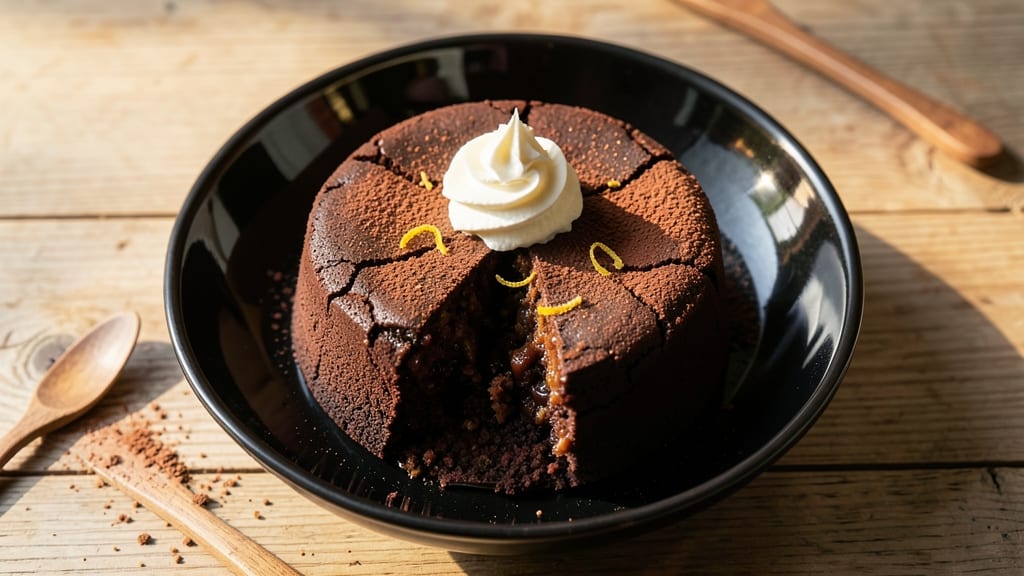
This Capital Grille flourless chocolate espresso cake delivers the restaurant's signature fudgy density and deep espresso infusion in your home oven. The secret lies in a rich espresso reduction and high-quality dark chocolate melted into butter for an ultra-moist crumb.
I've perfected this technique after years of testing—no flour, no regrets, just pure decadence in every slice.
The foundation starts with a 350°F bake for 30-35 minutes, where melted butter and chocolate create a velvety texture that's both rich and airy. The espresso reduction (just 2 tablespoons of concentrated flavor) transforms ordinary chocolate into something sophisticated and complex.
What sets this apart is the fudgy yet tender crumb that holds together like a perfect cake should.
What you'll achieve is a restaurant-quality dessert with a glossy chocolate top, tender interior, and espresso notes that linger on the palate. The edges stay slightly crisp while the center remains moist—no dry crumbs here.
This is the kind of cake that disappears quickly but leaves a lasting impression on your guests.
Serve warm with vanilla ice cream or dusted with cocoa powder for that final touch. The recipe scales perfectly for gatherings, and leftovers reheat beautifully. Let's bring that Capital Grille magic to your kitchen—it's easier than you think.
Ingredients for capital grille flourless chocolate espresso cake
The secret to this restaurant-style cake lies in rich chocolate, velvety butter, and espresso's deep complexity.
| Ingredient | Amount | Notes |
|---|---|---|
| Unsalted Butter 🧈 | 1 cup | Melted, cooled slightly for better texture |
| High-Quality Dark Chocolate 🍫 | 8 oz | 70% cocoa or higher, chopped fine |
| Granulated Sugar 🍚 | 1 ½ cups | Superfine preferred for smoother texture |
| Large Eggs 🥚 | 4 whole | Room temperature for even mixing |
| Espresso Powder ☕ | 2 tbsp | Pure, finely ground espresso for depth |
| Vanilla Extract 🌿 | 1 tsp | Pure Madagascar bourbon preferred |
| All-Purpose Flour 🌾 | ¼ cup | For dusting pan only (technically flourless) |
| Unsweetened Cocoa Powder 🍫 | ¼ cup | Dutch-processed for smoother flavor |
| Powdered Sugar 🍚 | ½ cup | For dusting top before serving |
| Salt 🧂 | ½ tsp | Fine sea salt for balance |
| Espresso Reduction ☕ | 2 tbsp | Homemade or quality bottled version |
| Vanilla Ice Cream 🍦 | 1 cup | For serving (optional but recommended) |
The chocolate and butter are non-negotiable here. Valrhona or Guittard dark chocolate bars deliver that signature depth—avoid the grocery store basics. For butter, Plugrá or Land O'Lakes unsalted work perfectly, but don't use margarine. The espresso powder? Starbucks or Lavazza brands from the coffee aisle give you that authentic restaurant flavor. Pro tip: toast your cocoa powder in a dry pan for 2 minutes to deepen its aroma before mixing. And yes, you'll need a 9-inch springform pan—Wilton or USA Pan brands are my go-to for perfect release.
No espresso powder? Two shots of brewed espresso work in a pinch (just reduce the liquid elsewhere in the recipe). Substituting vanilla? Almond extract at half the amount adds complexity, but vanilla is ideal. For the sugar, superfine is best, but if you only have regular granulated, pulse it in a food processor for 30 seconds. The eggs must be room temperature—cold eggs create air pockets that ruin the fudgy texture. And that powdered sugar topping? Use confectioners' sugar, not regular powdered sugar (they're not the same!).
This cake keeps beautifully—3 days at room temperature wrapped tightly or 1 week refrigerated. For serving, slice when completely cool, then dust with powdered sugar right before presenting. Leftovers reheat wonderfully—10 seconds in the microwave with a damp paper towel restores that warm, gooey texture. Store any extra in an airtight container with parchment between layers. Trust me, you'll want seconds.
Why You'll Love This Recipe
- No Fuss, One Bowl: Between us, this cake is basically a "dump and bake" for grown-ups. Melt butter, chop chocolate, whisk eggs—no mixer, no fancy techniques. The espresso powder dissolves right into the sugar, so you’re not dealing with clumps or measuring coffee separately. Honestly, it’s the kind of recipe that makes me feel like I’m cheating when I pull it off.
- Rich Without Guilt: That first bite? It’s like biting into a decadent dessert, but somehow it’s not. The dark chocolate and butter create this velvety, fudgy texture, while the espresso cuts through the sweetness—no sugar crash here. I’ll be real: my coffee-loving husband actually prefers this over his usual cake, and he’s not easy to impress.
- Leftovers? Better Than Fresh: Here’s what sold me—this cake improves the next day. The flavors meld, the texture gets even more tender, and it’s perfect for sneaking into lunchboxes or grabbing as a mid-afternoon pick-me-up. I’ve wrapped slices in foil and stashed them in the fridge for up to five days—no one ever guesses how old they are.
- Budget-Friendly Luxury: You’d think a cake this good would break the bank, but it doesn’t. High-quality dark chocolate and butter make it taste special, but you’re not using specialty ingredients like vanilla beans or almond flour. A single block of chocolate and a bag of espresso powder last for multiple cakes, and the rest? Pantry staples. It’s the kind of treat that feels indulgent without draining your wallet.
Step-by-step instructions for Capital Grille flourless chocolate espresso cake
This cake delivers the perfect balance of fudgy texture and bold espresso notes—just like the Capital Grille version.
Melt Chocolate and Butter for a Smooth Base
In a heatproof bowl set over a pot of simmering water, combine the 1 cup unsalted butter and 8 oz high-quality dark chocolate. Stir gently until both are completely melted and smooth, then remove from heat. Let the mixture cool slightly—it should be warm to the touch but not hot. This step is crucial for preventing scrambled eggs later.
While the chocolate cools, whisk together the 1.5 cups granulated sugar, 2 tbsp espresso powder, and 0.5 tsp salt in a separate bowl. The sugar should dissolve completely, and the espresso powder will blend seamlessly into the mixture. This dry blend ensures even distribution of flavor throughout the cake.
Incorporate Eggs and Vanilla for Lightness
Add the 4 whole large eggs, one at a time, to the melted chocolate mixture while whisking constantly. After each addition, whisk until fully incorporated before adding the next. This gradual process creates a smooth, airy batter. Once all eggs are added, stir in the 1 tsp vanilla extract and the prepared sugar-espresso blend.
Next, fold in the 0.25 cup unsweetened cocoa powder using a rubber spatula. Be gentle to avoid deflating the batter—you want to maintain as much air as possible for a light yet dense texture. The cocoa powder will deepen the chocolate flavor while keeping the cake rich but not overly heavy.
Prepare the Pan and Bake the Cake
Preheat your oven to 350°F. Lightly dust an 8-inch round cake pan with the 0.25 cup all-purpose flour, tapping out any excess. Pour the batter into the pan and smooth the top with a spatula. The batter will be thick but pourable—don’t overmix or pack it down.
Bake for 35-40 minutes, or until the top is set and a toothpick inserted into the center comes out with a few moist crumbs (not wet batter). The cake should spring back slightly when gently pressed. Overbaking will make it dry, so keep an eye on it toward the end of the baking time.
Cool and Serve with Espresso Reduction
Remove the cake from the oven and let it cool in the pan for 10 minutes. Then, invert it onto a wire rack to cool completely. While it cools, warm the 2 tbsp espresso reduction in a small saucepan over low heat until just heated through—this will enhance the espresso flavor when drizzled over the cake.
Once fully cooled, dust the top generously with the 0.5 cup powdered sugar using a fine-mesh sieve. Serve each slice with a dollop of 1 cup vanilla ice cream and a drizzle of the warmed espresso reduction. The contrast of warm cake, cool ice cream, and bold espresso creates an unforgettable dessert experience.
Pro Tips For Making Capital Grille Flourless Chocolate Espresso Cake
- Temper the Eggs: Whisk the eggs at room temperature—cold eggs won’t blend smoothly with melted butter and chocolate, and you’ll end up with streaks. I learned this the hard way when my first batch looked like a failed fondue. Pop them in a warm (not hot) water bath for 10 minutes first.
- Melt Butter Slowly: Heat the butter over low heat until it’s just melted and barely foamy—no browning, no bubbles. Overcooking it turns the butter nutty and bitter, which fights the chocolate’s richness. Use a thermometer if you’re paranoid (160°F is the sweet spot).
- Sift the Espresso Powder: Don’t just dump the espresso powder—sift it through a fine-mesh sieve to avoid clumps in your batter. I used to eyeball it, and the cake would taste unevenly bitter. A quick sift guarantees smooth flavor distribution.
- Chill the Batter: Let the batter rest for 15–20 minutes before baking—this helps the eggs fully incorporate and prevents a dense, gummy texture. I was skeptical until I tried it; now I won’t skip it. (Yes, even if you’re impatient like me.)
Essential equipment for this recipe
Precision Tools
You'll need a high-quality 8-inch springform pan—I swear by Wilton or USA Pan brands for their reliable release. These pans ensure clean slices without sticking, which is critical for this delicate cake.
A digital kitchen scale (like OXO Good Grips) is essential for accurate measurements, especially when weighing chocolate and butter. 🧈
Heat Control Essentials
A thermometer (I use Thermoworks Thermapen) is non-negotiable for monitoring your oven's accuracy. Ovens run hot or cold, and this cake demands 350°F precision.
For melting the chocolate and butter, a double boiler setup (or a heatproof bowl over simmering water) prevents scorching. Never microwave chocolate—it creates grainy texture.
Mixing Must-Haves
Invest in a stainless steel whisk (like OXO's Good Grips) for smooth egg incorporation and a silicone spatula (I love Epicurean) for gentle folding of cocoa powder.
A fine-mesh sieve (from OXO) is perfect for dusting powdered sugar evenly. For the espresso reduction, a small saucepan with a pouring spout makes drizzling effortless. ☕
Optional Upgrades
For professional results, consider a cake tester (like OXO's) to check doneness without overmixing. A stand mixer with whisk attachment (I use KitchenAid) saves time when combining eggs, but a handheld mixer works too.
For serving, a drizzling bottle (like Weck's) adds elegance when presenting the espresso reduction.
Budget-Friendly Swaps
Skip the fancy tools? A standard 8-inch cake pan works if you grease it well with butter and dust with flour. Use a wooden spoon instead of a whisk—just whisk faster. For melting chocolate, a microwave-safe bowl (30-second bursts on low power) is fine, though double boiler gives better control.
The key is patience—this cake forgives minor tool differences if you follow the technique. 💡
Nutrition facts
Frequently asked questions
Why does this cake need espresso powder instead of regular coffee?
The espresso powder delivers a concentrated, deep coffee flavor without adding moisture that brewed coffee would. Just 2 tablespoons gives that signature Capital Grille espresso kick while keeping the cake's perfect texture. Think of it as flavor extraction rather than liquid infusion.
Can I make this cake ahead of time?
This cake actually improves overnight. Store it wrapped tightly at room temperature for 3 days or refrigerate for 1 week. Reheat slices for 10 seconds in the microwave with a damp paper towel to restore that warm, gooey texture. The flavors deepen as it rests!
What's the secret to keeping this cake moist without flour?
The magic comes from the room-temperature eggs and melted butter-chocolate base. The eggs create air pockets while the fat keeps everything tender. Never overbake—35-40 minutes at 350°F is perfect. The cake should spring back when pressed, not feel rubbery.
Can I substitute cocoa powder with melted chocolate?
Not recommended! The cocoa powder adds structure and deepens the chocolate flavor without making the cake too dense. If you must substitute, use 2 oz extra dark chocolate melted into the butter, but expect a slightly heavier texture. The powdered sugar topping helps balance this.
How do I fix cracked edges on my cake?
Cracked edges usually mean the cake cooled too quickly. Let it cool in the pan for 15 minutes before inverting, then place on a wire rack. For serving, use a serrated knife and dip it in hot water between slices to prevent crumbling. The cracks won't affect flavor—just the presentation!