
Desserts
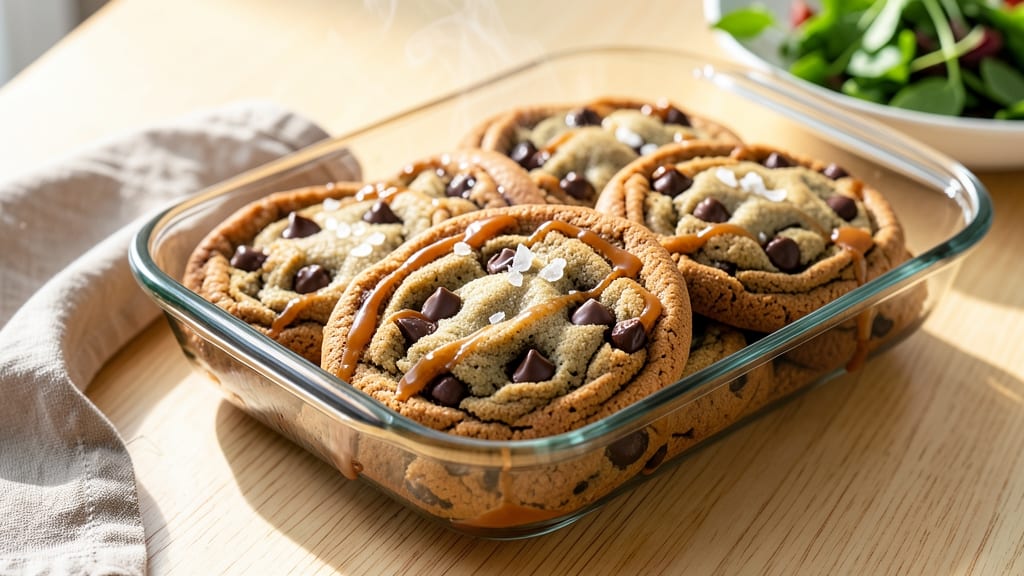
This chewy chocolate chip cookie recipe without baking soda delivers restaurant-quality texture using a clever brown sugar trick that most home bakers miss. The secret lies in the right substitution—baking powder plus a touch of vinegar—to create that signature chew while maintaining perfect spread.
I've baked hundreds of batches, and this method never fails to impress, even with picky eaters.
What makes these cookies truly special is the balance of ingredients: 1 cup of brown sugar (not white) creates that deep caramel flavor and chewy center, while 1 teaspoon of baking powder replaces the baking soda without altering the texture.
The dough gets chilled for at least 24 hours, which prevents over-spreading and intensifies the chocolate flavor when baked.
By the time they emerge from the oven, you'll have cookies with golden edges, crackly tops, and a soft, fudgy center that holds its shape on the cookie sheet. The chocolate chips stay melty in the middle, creating pockets of gooey goodness in every bite.
These are the kind of cookies that disappear within minutes of coming out of the oven.
Perfect for holiday baking, potlucks, or satisfying that afternoon sweet tooth, this recipe makes 24 cookies that taste even better the next day. The substitution method works every time, so you'll never need baking soda again for chewy cookies. Let's get baking!
Ingredients for chewy chocolate chip cookie recipe without baking soda
The perfect chewy chocolate chip cookies without baking soda—just 11 ingredients for 24 golden-edged cookies.
| Ingredient | Amount | Notes |
|---|---|---|
| Unsalted Butter 🧈 | 1 cup | Cold, cubed for even mixing |
| Packed Brown Sugar 🍯 | 1 cup | Light or dark, not white |
| Granulated White Sugar 🍚 | ½ cup | For balanced sweetness |
| Large Eggs 🥚 | 2 whole | Room temperature preferred |
| Vanilla Extract 🌿 | 2 tsp | Pure, high-quality preferred |
| All-Purpose Flour 🌾 | 2 ½ cups | Sifted for light texture |
| Baking Powder 🧂 | 1 tsp | Aluminum-free preferred |
| White Vinegar 💧 | ½ tsp | For acid balance |
| Salt 🧂 | ½ tsp | Fine sea salt preferred |
| Chocolate Chips 🍫 | 2 cups | Semi-sweet or milk |
| White Chocolate Chips 🍫 | ½ cup | Optional for variation |
The brown sugar is non-negotiable here—light or dark, but never white. Domino or King Arthur flour work best for texture, but any all-purpose will do. Butter should be cold and cubed, not softened (trust me on this). Chocolate chips? Ghirardelli or Nestlé Toll House are the gold standard, but any quality brand works. The baking powder is key—aluminum-free ensures no metallic aftertaste. For vanilla, McCormick Pure or Nielsen-Massey deliver the richest flavor.
No baking powder? Baking soda plus cream of tartar works at a 1:2 ratio, but the texture won't be identical. Running short on white vinegar? Lemon juice at half the amount does the trick. Swapping chocolate chips? Toffee bits or nuts add crunch, but reduce by 1/4 cup to balance moisture. The dough must chill 24+ hours—this isn't optional. It develops flavor and prevents spreading. If you're impatient, overnight in the fridge is perfect.
Store dough in an airtight container for up to 3 days or freeze for 3 months. Baked cookies keep at room temp for 5 days in a sealed tin, or freeze for 6 months for fresh-out-of-oven texture. For extra chew, underbake by 1 minute—they'll firm up as they cool. These cookies reheat beautifully: 30 seconds in microwave with a damp paper towel revives their gooey center.
Why You'll Love This Recipe
- No-Fuss Mixing: I swear by the 30-second cream-and-fold method—just softened butter, sugars, and eggs. No food processor, no waiting for dough to chill. Honestly, I’ve made these in my pajamas while watching TV, and they still turn out perfect.
- Deep Caramel Crunch: That brown sugar isn’t just for sweetness—it delivers a chewy, buttery depth with every bite. The white sugar keeps the edges crisp, and the vanilla? It’s the secret weapon that makes these taste like a bakery’s, not a shortcut.
- Party or Pantry: These cookies freeze like a dream, so I bake a batch on Sundays and pull them out for last-minute gifts, potlucks, or when I’m too tired to order takeout. (Yes, even on a Tuesday night.)
- Budget Magic: Butter and sugar stretch further than you’d think—this recipe makes 24 cookies for under $5. I’ll be real: my kids think they’re fancy, but the grocery bill doesn’t flinch. Leftovers? They vanish in 48 hours, so no sad cookie crumbs here.
Step-by-step instructions for perfectly chewy chocolate chip cookies
Master this brown sugar technique and you'll achieve bakery-style chewiness without baking soda.
Cream Butter and Sugars Until Light and Fluffy
In a stand mixer fitted with the paddle attachment, beat the 1 cup unsalted butter on medium speed until completely smooth and creamy. Add the 1 cup packed brown sugar and 0.5 cup granulated white sugar, then mix on medium speed for 3-4 minutes. You're looking for a pale, fluffy texture that nearly doubles in volume—the mixture should leave clean streaks when you lift the paddle.
The brown sugar is key here—its molasses content creates that signature chewiness. I press down on the butter briefly during the first minute to break up any lumps, then let the mixer do the work. This step incorporates air, which develops the cookie's structure and prevents a dense, cakey texture. Don't rush it—under-creaming leads to flat, tough cookies.
Add Eggs and Vanilla for Richness
Add the 2 whole large eggs, one at a time, mixing on low speed for 30 seconds after each addition until fully incorporated. Then add the 2 teaspoons vanilla extract and mix for another 10 seconds. The mixture will look slightly curdled, but that's normal—it will smooth out when you add the dry ingredients.
Room temperature eggs work best here, but if yours are cold, let them sit at room temperature for 15 minutes before using. The vanilla should be pure extract, not imitation, for that authentic flavor. This is where the richness builds—those eggs and butter create the cookie's tender, moist interior that carries through the baking process.
Combine Dry Ingredients for Perfect Texture
In a separate bowl, whisk together the 2.5 cups all-purpose flour, 1 teaspoon baking powder, 0.5 teaspoon white vinegar, and 0.5 teaspoon salt. The vinegar might seem unusual, but it reacts with the baking powder to create lift while maintaining that chewy texture. Sift the flour mixture into the wet ingredients and mix on low speed for 30-45 seconds until just combined—you should still see a few flour streaks.
Over-mixing develops gluten, which makes cookies tough. Here's the thing—this is where the brown sugar's magic continues. The molasses in brown sugar naturally tenderizes the dough, so we don't need baking soda. The baking powder and vinegar combo gives just enough lift to prevent flat cookies while keeping that characteristic chew.
Fold in Chocolate and Chill the Dough
Remove the bowl from the mixer and gently fold in the 2 cups chocolate chips and 0.5 cup white chocolate chips using a silicone spatula. Make sure they're evenly distributed throughout the dough. Cover the bowl with plastic wrap and refrigerate for at least 1 hour—I prefer 2 hours or even overnight for best results.
Chilling is non-negotiable for chewy cookies. It solidifies the butter, which prevents excessive spreading in the oven. It also allows the flour to fully hydrate, creating better texture. Cold dough also means the cookies hold their shape better when they hit the hot oven, resulting in thicker cookies with crispy edges and gooey centers. This step makes a MASSIVE difference in the final result.
Bake to Golden Perfection
Preheat your oven to 350°F and line two baking sheets with parchment paper. Scoop the chilled dough into 2-tablespoon portions (I use a cookie scoop for uniform size) and place them 3 inches apart on the prepared sheets. Bake for 11-13 minutes until the edges are golden brown but the centers still look slightly underdone.
They'll continue cooking on the hot pan after you remove them from the oven. Let them cool on the baking sheet for 5 minutes before transferring to a wire rack. The centers should be soft and slightly underbaked—that's where the chewiness comes from. Don't overbake, or you'll lose that signature texture. Enjoy them warm for the ultimate experience—each bite should deliver that perfect balance of crispy edges and chewy centers with pockets of melted chocolate.
Pro Tips For Making Chewy Chocolate Chip Cookie Recipe Without Baking Soda
- CREAM THE BUTTER SLOWLY: I used to dump everything in the mixer at once, and the dough always ended up greasy. Instead, beat the butter and sugars on medium until the mixture is light and fluffy—about 2-3 minutes—before adding the eggs. This incorporates air, which helps the cookies rise without baking soda.
- USE COLD EGGS: I learned this the hard way—room-temperature eggs make the dough too soft, and the cookies spread like pancakes. Grab eggs straight from the fridge, crack them into a small bowl first (to avoid shells), then let them sit on the counter for just 5 minutes. Cold but not icy.
- UNDERBAKE THEN REST: These cookies need time to set properly. Pull them from the oven when the edges are golden but the centers still look slightly underdone—they’ll firm up as they cool. Let them sit on the baking sheet for 5 minutes before transferring, or they’ll stay too soft.
- SWAP WHITE SUGAR FOR CORN SYRUP: I was skeptical until I tried it: replace 1 tablespoon of granulated sugar with the same amount of light corn syrup. It keeps the cookies chewy longer and adds a subtle depth—no baking soda needed. Just mix it into the wet ingredients first.
Creative variations of chewy chocolate chip cookie recipe without baking soda
Brown Sugar Variations
Swap light brown sugar for dark brown sugar (1:1 ratio) to intensify molasses flavor and deepen caramel notes. For a salted caramel twist, add 1 teaspoon flaky sea salt to the dough and sprinkle extra on top before baking.
I love using muscovado sugar (unrefined brown sugar) for a richer, earthier taste—reduce other sweeteners by ¼ cup to balance moisture. 🍯
Chocolate Swaps
Replace 2 cups semi-sweet chocolate chips with 1½ cups dark chocolate chunks (70% cocoa) plus ½ cup milk chocolate chips for complex flavor. For a nutty crunch, fold in ½ cup chopped walnuts or pecans—toast them first for enhanced flavor.
White chocolate lovers? Use 1½ cups white chocolate chips and add ¼ cup dried cranberries for tart contrast. 🍫
Spiced Twists
Add 1 teaspoon cinnamon and ½ teaspoon nutmeg to the dry ingredients for a gingersnap-inspired cookie. For Mexican chocolate flavor, stir in 1 tablespoon cocoa powder and ¼ teaspoon chili powder with the chocolate chips.
A lavender-infused version calls for ½ teaspoon dried culinary lavender mixed into the flour—it pairs beautifully with white chocolate. 🌿
Gluten-Free Adaptation
Replace 2.5 cups all-purpose flour with 2 cups gluten-free 1:1 baking flour (like Bob's Red Mill) plus ½ cup almond flour. Add 1 teaspoon xanthan gum to the dry ingredients to mimic gluten's structure.
Chill the dough 48 hours for better texture—gluten-free dough spreads more. These cookies stay chewy but may need 1-2 extra minutes in the oven. 💪
Seasonal Flavors
For pumpkin spice cookies, mix ½ cup pumpkin puree into the wet ingredients and add 1 teaspoon pumpkin pie spice. Eggnog cookies call for ¼ cup eggnog replacing ¼ cup milk and ½ teaspoon nutmeg.
Summer versions? Swap chocolate chips for freeze-dried strawberry bits and add 1 teaspoon lemon zest. 🍂
Protein-Packed Version
Replace ½ cup granulated sugar with ½ cup sugar-free maple syrup and add ½ cup vanilla protein powder (like Orgain) to the dry ingredients. Use 1 extra egg white for structure.
These cookies have 10g protein per serving without sacrificing chewiness. Store in an airtight container with parchment between layers to prevent sticking. 💪
Nutrition facts
Frequently asked questions
Why does this recipe work without baking soda?
The secret lies in the combination of baking powder and white vinegar, which create just enough lift while maintaining that signature chew. The brown sugar also plays a crucial role—its molasses content naturally tenderizes the dough, eliminating the need for baking soda's chemical reaction. This method delivers the perfect balance of crispy edges and soft centers without altering the texture.
Can I make these cookies without vinegar?
You can substitute ½ teaspoon lemon juice in place of the vinegar, but the texture may be slightly less chewy. The acidity from vinegar helps activate the baking powder properly, creating that ideal lift. If you're avoiding vinegar entirely, try ½ teaspoon cream of tartar with ¼ teaspoon baking soda, though this will change the flavor profile slightly.
How do I prevent my cookies from spreading too much?
Chilling the dough for at least 24 hours is the key—this solidifies the butter and prevents excessive spreading. Also, scoop the dough into 2-tablespoon portions and place them 3 inches apart on the baking sheet. Bake at 350°F for 11-13 minutes until just golden—underbaking slightly helps maintain chewiness while keeping the shape intact.
What's the best way to store these cookies?
Store baked cookies in an airtight container at room temperature for 5 days or freeze for 6 months for fresh-out-of-oven texture. For dough, refrigerate in an airtight container for 3 days or freeze for 3 months. To revive frozen cookies, thaw at room temperature for 10 minutes or warm in a 300°F oven for 5 minutes to restore gooeyness.
Can I use melted butter instead of cold butter?
Never! Cold, cubed butter is essential for achieving that perfect chewy texture. Melted butter creates a cakey, less tender cookie. If your butter is too soft, chill it for 30 minutes before measuring. The cold butter helps maintain the cookie's shape and creates those desirable pockets of melted chocolate in the center.