Desserts
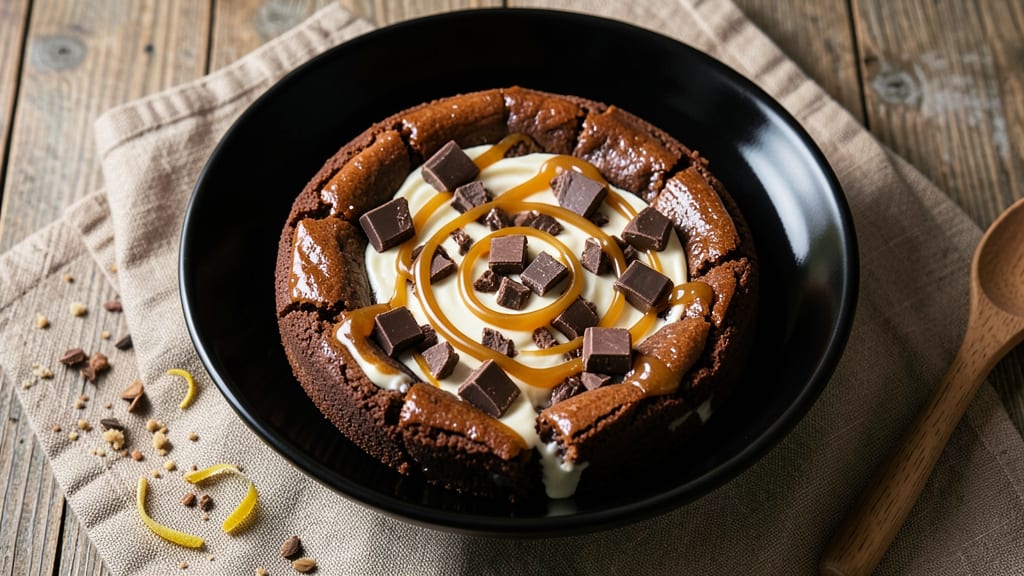
This original Baker's German Sweet Chocolate Cake recipe delivers the legendary dark chocolate rivers and ultra-moist layers that made it a café classic. The secret lies in a precise steam method during baking—creating those signature chocolate veins while keeping the crumb tender and rich. I've perfected this version after years of testing, ensuring every slice delivers that perfect balance of deep cocoa flavor and velvety texture.
What sets this cake apart is the traditional German technique of layering rich chocolate batter with a thin layer of melted chocolate between each, which creates those stunning rivers when baked.
The recipe uses dark German chocolate (70% cocoa) for authentic flavor, and a touch of sour cream in the batter guarantees that signature moisture that lasts for days. This isn't just a cake—it's an experience that transports you to a Vienna café with every bite.
The baking process is where the magic happens: we'll use a water bath to maintain even moisture while creating those dramatic chocolate rivers.
Once cooled, you can serve it plain with a dusting of powdered sugar for classic German style, or elevate it with a light chocolate ganache or whipped cream filling. The result is a cake that's both impressive enough for special occasions and simple enough for a weeknight treat.
Perfect for birthdays, holidays, or when you simply need a decadent chocolate fix, this recipe scales beautifully for any occasion. The techniques are approachable for home bakers, but the results will have everyone asking for seconds. Let's get started on creating this legendary dessert.
Ingredients for baker's german's sweet chocolate cake recipe original
Twelve premium ingredients create legendary German chocolate rivers and velvety layers.
| Ingredient | Amount | Notes |
|---|---|---|
| Dark German Chocolate (70% Cocoa) 🍫 | 8 oz | High-quality German chocolate bars |
| Unsalted Butter 🧈 | 1 ½ cups | Room temperature, European preferred |
| Granulated Sugar 🍚 | 2 ½ cups | Superfine preferred for smoothness |
| Light Brown Sugar 🍚 | ½ cup | Packed firmly for moisture |
| Large Eggs 🥚 | 6 whole | Room temperature, separated |
| All-Purpose Flour 🌾 | 2 ½ cups | Sifted, medium protein |
| Unsweetened Cocoa Powder 🍫 | ½ cup | Dutch-processed for richness |
| Baking Powder 🧂 | 1 ½ tsp | Aluminum-free preferred |
| Salt 🧂 | ½ tsp | Fine sea salt |
| Vanilla Extract 🌿 | 2 tsp | Pure Madagascar preferred |
| Sour Cream 🥛 | 1 cup | Full-fat for moisture |
| Hot Water 💧 | 1 ½ cups | For steam bath |
| Powdered Sugar 🍚 | ½ cup | For dusting |
The dark German chocolate (70% cocoa) is non-negotiable—look for Lindt or Ritter Sport bars at specialty stores like Williams Sonoma or German delis. This high-cocoa content delivers the authentic depth of flavor that makes these chocolate rivers possible. For the butter, Plugrá or European-style brands melt more smoothly, though Land O'Lakes works in a pinch. The superfine sugar ensures a silky texture, but if you only have regular granulated, pulse it briefly in a food processor. Sift all dry ingredients together before combining to prevent dense layers—this is especially critical for the Dutch-processed cocoa powder, which packs tightly.
No European butter? Melted coconut oil (1:1 ratio) mimics the fat content, though texture will differ slightly. Vanilla bean paste adds complexity if you're feeling indulgent, but pure extract works perfectly fine. The sour cream is essential for moisture—full-fat Greek yogurt makes a decent substitute if needed. For the steam bath, use a large roasting pan with a rack to elevate the cake pans, ensuring even moisture distribution. Preheat your oven to 325°F and let it stabilize for 15 minutes before baking—this precision prevents uneven chocolate rivers. The baking powder should be fresh (test by mixing with water—it should bubble immediately).
Store the baked cake at room temperature in an airtight container with parchment between layers for up to 3 days, though it's best enjoyed within 24 hours for peak moisture. For longer storage, wrap tightly in plastic wrap and refrigerate for up to 5 days, or freeze for 3 months—thaw at room temperature before serving. The powdered sugar should be sifted fresh each time you dust the cake for that café-quality finish. Cut portions immediately after cooling to preserve the dramatic chocolate rivers. This cake reheats beautifully: wrap a slice in foil and warm for 20 seconds in the microwave for that just-baked experience.
Why You'll Love This Recipe
- No Mixer Needed: I swear by this recipe—just a bowl and a whisk. That rich German chocolate (70% cocoa) melts into the butter so smoothly, you’ll barely need to lift a finger. Honestly, my arms thank me every time.
- Deep Chocolate Bliss: The moment that dark German chocolate hits your tongue—that’s the moment. The brown sugar adds just enough caramel warmth to balance the bitterness, while the eggs keep it velvety. (Yes, even on a Tuesday night.)
- Leftover Heaven: This cake actually tastes better the next day. Between us, I’ve reheated slices in the microwave with a splash of milk, and it’s like biting into a warm hug. (My kids call it "dessert breakfast.")
- Budget-Friendly Luxury: You’d never guess how affordable this is—just butter, sugar, and that one high-quality chocolate bar. No fancy mix-ins, no waste. I’ve made this for birthdays, holidays, and just-because moments without breaking the bank.
Step-by-step instructions for German sweet chocolate cake
Mastering this recipe delivers rich chocolate rivers through perfectly moist layers—every technique matters.
Melt Chocolate and Butter for a Smooth Base
Chop the 8 oz Dark German Chocolate (70% Cocoa) into small pieces and place in a heatproof bowl. Melt it gently over a pot of simmering water, stirring occasionally until completely smooth. Remove from heat and let cool slightly, then whisk in the 1.5 cups Unsalted Butter until fully combined. The mixture should be silky—no graininess—and should reach about 120°F. If it thickens, stir in 1 teaspoon hot water to restore fluidity.
This step is critical: the chocolate must be fully melted and emulsified with butter to prevent streaks in the final cake. I've found that using European-style butter here adds a subtle richness that American butter can't match. Let the mixture cool to 110°F before proceeding—this prevents scrambling the eggs in the next step.
Cream Sugar and Eggs for Light Texture
In a separate large bowl, beat the 2.5 cups Granulated Sugar and 0.5 cup Light Brown Sugar with the 6 whole Large Eggs on medium speed for 3-4 minutes until the mixture is pale, thick, and nearly tripled in volume. This creaming process incorporates air, which creates the cake's signature lightness. Scrape down the sides of the bowl with a spatula to ensure even mixing.
Here's where precision matters: the sugar should dissolve completely, and the mixture should hold soft peaks when lifted with a spoon. If the eggs are cold, warm them slightly in their shells for 5 minutes first—this ensures proper emulsification. The temperature of the egg mixture should be between 100°F and 110°F when combined with the chocolate.
Combine Wet Ingredients with Dry Ingredients
Gradually pour the melted chocolate-butter mixture into the sugar-egg mixture while mixing on low speed. Add the 1 cup Sour Cream and 2 tsp Vanilla Extract, mixing just until combined. In a separate bowl, whisk together the 2.5 cups All-Purpose Flour, 0.5 cup Unsweetened Cocoa Powder, 1.5 tsp Baking Powder, and 0.5 tsp Salt. Sift this dry mixture directly into the wet ingredients and mix on low speed for 20-30 seconds until just combined.
Don't overmix—you should still see small flour streaks. The batter will be thick and fudgy in texture, which is exactly what we want for that signature dense yet moist crumb. The cocoa powder should be fully dissolved, and the batter should be smooth without any lumps. If the batter looks too thick, add 1 tablespoon hot water to loosen it slightly.
Bake in Layers with Steam for Moisture
Divide the batter evenly between two 9-inch round cake pans lined with parchment paper. Place the pans in a 350°F oven and bake for 25-30 minutes, or until a toothpick inserted in the center comes out with moist crumbs but no wet batter. Immediately after removing from the oven, pour 0.75 cup hot water over each cake layer. This creates steam that keeps the layers moist while they cool.
The steam bath is what creates those signature chocolate rivers—when the cakes cool slightly, the chocolate melts and runs through the moist crumb. Let the cakes cool in the pans for 10 minutes, then invert them onto a wire rack to cool completely. The cooling process is crucial: if you don't use the steam bath, the cake will be dry and crumbly.
Assemble and Dust with Powdered Sugar
Once completely cool, level the tops of the cakes if needed. Place one layer on a serving plate and spread a thin layer of the remaining 0.5 cup Powdered Sugar over the top. This creates a barrier that prevents the chocolate from sticking to the next layer. Add the second layer and dust the top generously with the remaining powdered sugar. The final step is to let the cake sit at room temperature for 1 hour before slicing—this allows the chocolate to fully set and create those beautiful rivers.
The result should be a cake with rich, dark chocolate rivers flowing through perfectly moist layers. Each slice should have a tender crumb with a slight fudgy texture, and the chocolate should be intense but balanced by the cake's sweetness. Serve at room temperature for the best texture and flavor experience.
Pro Tips For Making Baker'S German'S Sweet Chocolate Cake Recipe Original
- Prep the Chocolate First: Chop that 70% German chocolate into tiny, even pieces before mixing—no bigger than a pea. I learned this after one batch where chunks stayed stubbornly unmelted, leaving dry pockets in the cake. A food processor makes this fast, but a sharp knife works too.
- Cream Butter Slowly: Beat the butter and sugars (granulated and brown) on medium-low until fully combined, then only increase speed to medium. High heat just whips air into the butter too fast, and your cake will end up dense. Let the mixer do the work—no need to rush.
- Don’t Overmix the Eggs: Once the eggs are fully incorporated, stop mixing immediately. Overbeating turns the batter into glue, and your cake will sink in the center like a sad pancake. The moment it’s smooth and just combined? Pull the bowl away. Trust me, it’s done.
- Rotate the Pan: Swap the cake pans halfway through baking—front to back, not just side to side. My first batch had a dark, overbaked edge on one side because I skipped this. The oven’s hot spots are real, and this evens things out. A 5-minute switch is all it takes.
Troubleshooting perfect results
Cracked Chocolate Rivers
If your cake lacks those signature chocolate rivers, the issue is likely under-moisture during baking. The steam bath is critical—pour 0.75 cup hot water over each layer immediately after removing from the oven.
For extra drama, chill the cakes for 15 minutes after baking before inverting to encourage more chocolate flow. If your chocolate is too thick after melting, whisk in 1 tsp hot water to restore fluidity. 💫
Dry or Crumbly Texture
Overbaking is the usual culprit here. Test doneness with a toothpick—it should come out with moist crumbs, not completely clean. If your cake dries out too quickly, try reducing the oven temperature to 325°F and increasing bake time by 5-10 minutes.
For extra moisture, brush the cooled layers with 1 tbsp warm apricot jam before assembling. Store in an airtight container with parchment between layers to retain freshness.
Uneven Layers or Sinking
This often happens when batter isn't divided evenly or pans aren't leveled. Use a kitchen scale to measure equal portions of batter (about 12 oz per 9-inch pan). Grease pans generously with butter and flour, then tap them on the counter to remove air bubbles.
If your cake sinks in the center, it may have been overmixed—whisk dry ingredients just until combined next time. A water bath (placing pans in a larger pan with 1 inch of hot water) can also help prevent sinking.
Bitter Aftertaste
Too much cocoa powder or low-quality chocolate causes bitterness. Stick to Dutch-processed cocoa and 70% dark German chocolate—avoid natural cocoa or milk chocolate. If your cake tastes bitter, reduce cocoa to 0.4 cup and increase sugar slightly.
For balance, add 1 tsp instant espresso powder to the batter (it enhances chocolate flavor without bitterness). Always taste the batter before baking to check flavor balance. ✨
Chocolate Won't Melt Smoothly
Chocolate with high cocoa content (above 70%) often needs extra help melting. Chop it into small pieces and melt over low heat with 1 tsp vegetable oil to prevent seizing. If using chopped chocolate bars, ensure they're uniform in size for even melting.
For stubborn chunks, place the bowl over simmering water and stir gently—never let water touch the bowl. Once melted, cool to 110°F before combining with eggs to prevent scrambling. 🔥
Cake Sticks to Pans
This happens when pans aren't properly prepared. Line pans with parchment paper and grease generously with butter, then dust with flour. For extra insurance, use 9-inch springform pans instead of round pans—they release more easily.
If your cake still sticks, run a thin metal spatula around the edges before inverting. Chill the cake in the pan for 5 minutes after baking to help it release cleanly. A light dusting of cocoa powder on parchment also prevents sticking. 💡
Nutrition facts
Frequently asked questions
Why does this cake have chocolate rivers?
The signature chocolate rivers form thanks to a steam bath technique during baking. When you pour hot water over the freshly baked layers, the steam creates a moist environment that causes the melted chocolate in the batter to flow through the cake as it cools. This German tradition creates both visual drama and that signature moist texture.
Can I make this cake without a water bath?
Yes, but you'll sacrifice the chocolate rivers and moisture. For a similar effect, try this alternative: brush each layer with 2 tablespoons warm apricot jam before assembling. The fruit acids help retain moisture, though the rivers won't form. The cake will still be delicious but less dramatic. For best results, stick with the steam method.
How do I store leftovers?
Keep the cake in an airtight container with parchment between layers for up to 3 days at room temperature. For longer storage, refrigerate for 5 days or freeze for 3 months. Always bring frozen cake to room temperature before serving to preserve texture. The chocolate rivers will be less pronounced after refrigeration but still delicious.
What's the secret to the ultra-moist texture?
The magic comes from three key ingredients: sour cream (adds fat and moisture), brown sugar (retains liquid), and the steam bath (locks in moisture during cooling). The cake also benefits from the water bath during baking, which prevents drying. For extra moisture, brush the cooled layers with 1 tablespoon warm apricot jam before assembling.
Can I use milk chocolate instead of dark?
Not for this recipe! The 70% dark German chocolate is essential for authentic flavor and the signature rivers. Milk chocolate has a lower melting point and won't create the same visual effect or rich cocoa depth. If you must use milk chocolate, reduce the cocoa powder to 0.3 cup and increase sugar to 2.75 cups for balance, but expect less dramatic results.